
The Second Cheek Doctrine: A Ma’atian Interpretation of Forgiveness, Destiny, and the Ethics of the Ib
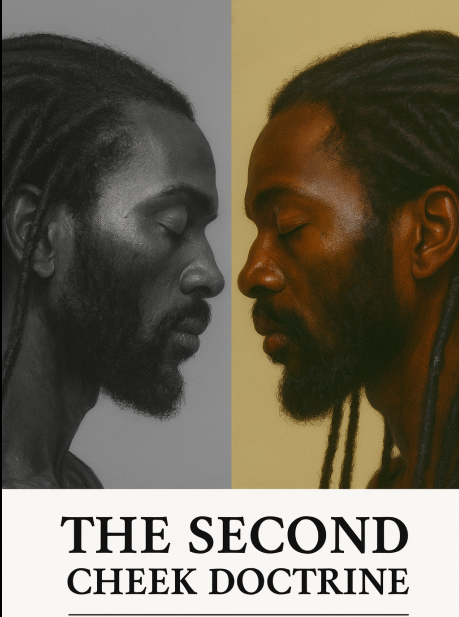
BY: OMOLAJA MAKINEE
Across the world, “turn the other cheek” has been taught as a doctrine of moral purity—an expectation that the righteous should silently endure harm as a sign of spiritual maturity. But when traced back to its older African lineage and the Ma’atian cosmology from which later traditions borrowed, this instruction reveals a completely different logic. The so-called “Second Cheek Doctrine” was never a universal mandate for pacifism, nor a blanket call to embrace vulnerability. It was a diagnostic tool—used by a single spiritually potent soul to expose the intentions and moral composition of others.
Here, I restores the doctrine to its original metaphysical structure, grounded in African understandings of destiny (ẹru ẹmi), intention (ib), cosmic balance (Ma’at), and the karmic weight borne by the Ka.
1. The Forgotten Distinction: Ẹru Emi versus Ib
African cosmology begins with a fundamental question: Is an action destiny-driven or ib-driven?
- Ẹru ẹmi is the the burden bag; the predetermined obligations a soul agreed to before birth.
- Ib is the personal will; the field of self-determined impulses, emotions, desires, weaknesses, and choices.
Every event in human interaction emerges from one of these two roots. And this distinction is the heart of the original doctrine.
If an aggressor strikes you because the blow was prewritten in both of your ẹru ẹmi, then the event belongs to cosmic equilibrium. The receiver’s endurance fulfills their contract. The aggressor incurs no karmic stain, because the strike was part of their soul’s predetermined role.
But if the aggressor strikes from ib—from envy, moral blindness, arrogance, fear, malice, or insecurity—then the blow becomes a spiritual crime. This act was not necessitated by destiny. It was self-determined. And every self-determined violation stains the Ka.
Thus the doctrine was never about meekness. It was about discernment.
2. The First Strike: The Only One That Might Be Destined
In African metaphysics, the first strike can belong to destiny. Perhaps:
- the souls had a prior agreement,
- an old conflict needed rebalancing,
- or a karmic seed required resolution.
The first blow can be the fulfillment of a script written in the spiritual marketplace before birth. This is why many traditions across Africa refrain from judging the first act of harm too quickly. One must first consult divination, intuition, or ancestral insight to discern:
“Did destiny require this?”
If yes, the receiver’s calmness fulfills the equilibrium. If no, the aggressor immediately bears karmic consequence.
Only one strike can fall under cosmic necessity. It is the second that reveals the truth.
3. The Second Cheek as a Spiritual Trap
The doctrine’s origin lies not in religion but in the life of a spiritually advanced initiate who weaponised vulnerability as a means of spiritual diagnosis. When he offered the second cheek, he was not teaching endurance—he was setting a trap.
The second cheek did not exist to instruct humility. It existed to expose motives. By offering the second cheek, he silently asked:
“Was the first strike your destiny or your ib?” “Did fate move your hand—or did your shadow?” “Will you repeat an act that was never written for you?”
The second blow is almost never predetermined. It is a pure act of ib. Thus, if the aggressor strikes again, they reveal their inner composition:
- the darkness they carry,
- the imbalance of their Ka,
- the moral fracture within their ib,
- and the karmic burden they have generated.
The second cheek is not a call to pacifism. It is a mirror.
4. How Later Religions Distorted the Doctrine
The tragedy began when this single, context-specific method of spiritual testing was universalised and repackaged as moral instruction. A technique used by one initiate to expose the intentions of others became a global mandate for believers.
This distortion created several dangers:
- It teaches vulnerable people to remain exposed to harm that destiny never required.
- It allows aggressors to accumulate karmic stain without resistance or warning.
- It disrupts Ma’at by enabling imbalance rather than resolving it.
- It treats a surgical tool as if it were general medicine.
The original practitioner understood exactly what he was doing, why he was doing it, and how to read the moral outcome. Most followers do not.
A personal metaphysical trap became a religious virtue—and the result has been centuries of spiritual injury.
5. African Cosmology Rejects the Universal Second Cheek
Within indigenous African thought, only the first blow may exists within the realm of possibility. The second is different:
- The first blow may be woven into the soul’s ẹru ẹmi.
- The second blow is almost always voluntary.
- The third is pure malice, cruelty, or imbalance.
Therefore, to allow a second blow is not noble. It is spiritually hazardous.
The African cosmological admonition is clear: Withdraw after the first strike. The second is unnecessary and karmically damning.
Accepting a second blow traps both souls in new karmic entanglements:
- The victim becomes burdened by an injury destiny did not require.
- The aggressor accrues stains not written into their burden bag.
- Both must resolve this new imbalance in future incarnations.
This is why African tradition teaches:
“Endure only what destiny required. Resist what destiny did not write.”
6. Forgiveness Through Ma’at, Not Submission
Forgiveness, in this framework, is not the act of enduring harm repeatedly. It is the act of restoring Ma’at:
- releasing karmic debris,
- disentangling from self-determined harm,
- purifying the Ka,
- and preventing the ib of another from colonising your ẹru ẹmi.
Forgiveness is not evasion. It is cosmic hygiene.
The Second Cheek Doctrine, properly understood, teaches:
- You may endure the first blow with grace if destiny required it.
- You must avoid the second blow, because it belongs to the aggressor’s moral failing, not to cosmic necessity.
The doctrine is therefore a call to discern, not to surrender.
Conclusion: The True Ethical Message
The reclaimed Ma’atian teaching can be summarised as follows:
- Not all harm is equal. Some is destiny, some is ib.
- The first blow may be predetermined. Endure it with clarity.
- The second blow is almost never destined. Do not stand still for it.
- Offering the second cheek was originally a diagnostic test, used by one spiritually acute initiate to expose the moral nature of the aggressor.
- Universalising that test is spiritually dangerous, because it forces innocent people to become bait for karmic downfall.
- African cosmology insists on balance, not needless suffering.
Forgiveness is not a passive virtue. It is an intelligent calibration of destiny, justice, and cosmic equilibrium.
Back to 👇