
The Air We Don’t Notice: Evolutionary Mismatch and the Failure of Human Filtration in the Age of Fine Modernity
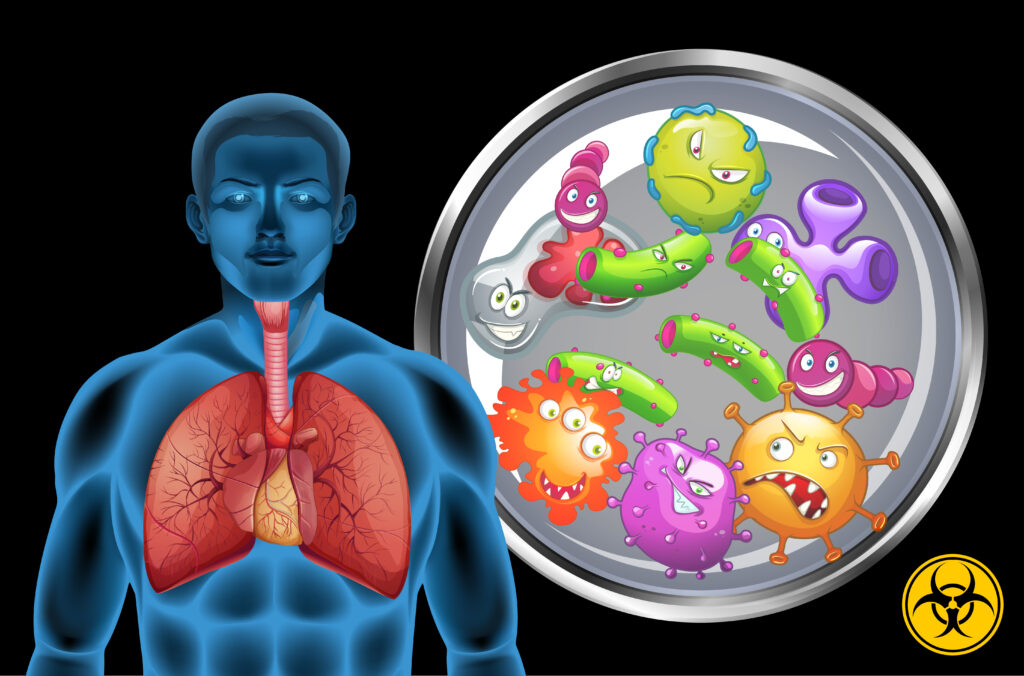
The World We Never Perceive
BY: OMOLAJA MAKINEE
One of the most overlooked truths about human biology is this:
Most of what enters the body never becomes experience.
Every breath carries a vast mixture of particles. Many of them:
- Enter the nostril.
- Encounter the filtration interface.
- And are removed before detection ever occurs.
They never:
- Reach sensory receptors.
- Trigger instinct.
- Enter memory.
- Become part of conscious awareness.
In behavioural terms, they are non-events.
The organism remains unaware—not because nothing happened, but because filtration prevented it from becoming signal.
1. The Limits of the Filter
But this system has limits. It was not designed to filter everything.
As particle size decreases, the effectiveness of the filtration system drops sharply. Smaller particles—ultrafine pollutants, synthetic chemicals, viral agents—can bypass:
- Nasal hair.
- Mucosal capture.
- Turbulent airflow sampling.
They pass through unnoticed, travelling deeper into the lungs and bloodstream. This is where the system reveals its blindspot.
2. Silent Inclusion: The Blind Spot of the Human Interface
In psychextrics, filtration is the organism’s first decision layer.
So what happens when something enters that the system cannot decide on?
It becomes Silent Inclusion. These are particles that:
- Are not filtered.
- Are not detected.
- Are not rejected.
They bypass the system entirely. They do not trigger a behavioural “No.” They simply enter.
3. Phantom Intake: When the Body Is Affected but the Mind Is Not
This creates a phenomenon known as Phantom Intake.
Substances such as:
- PM2.5 (fine particulate pollution).
- Volatile organic compounds (VOCs).
- Nano-scale synthetic materials.
- Airborne pathogens.
…can penetrate the filtration system without triggering perception.
To the brain’s meaning-making systems, nothing is wrong. There is no smell. No irritation. No warning. Yet at the biological level, everything is changing.
A. The Behavioural Gap
An individual may inhale polluted air or chemical vapour and feel completely fine. No discomfort. No instinct to leave. But internally:
- Blood chemistry shifts.
- Hormonal balance is altered.
- Inflammatory processes begin.
The body is reacting to something the mind never registered.
B. The Instinctive Lag
Because the filtration system did not trigger:
- A sneeze.
- A cough.
- A withdrawal reflex.
The organism remains in the harmful environment. This creates a dangerous delay:
The body is being affected without the behaviour required to escape the cause.
4. Evolutionary Mismatch: Coarse Nature versus Fine Modernity
To understand why this happens, we must confront a central truth:
The human filtration system evolved for a different world.
Our inherited architecture—our GIM-based design—was calibrated to handle:
- Dust.
- Pollen.
- Spores.
- Natural particulates.
These are coarse particles—large enough to be:
- Intercepted.
- Trapped.
- Detected.
Modern environments, however, operate on a different scale. We now breathe in:
- Nano-plastics.
- Combustion by-products.
- Industrial chemicals.
- Ultrafine airborne toxins.
These are fine particles—small enough to bypass the entire filtration system.
5. The Result: A System That Cannot Negotiate
The filtration spectrum is designed to negotiate with the environment. But modern particles do not negotiate. They bypass negotiation entirely.
This creates an evolutionary mismatch:
- The system expects coarse threats.
- The environment delivers invisible ones.
The organism is equipped to reject what it can detect. But modern threats are often undetectable at the Determinant Interface level.
6. When Filtration Fails Completely
The situation worsens when filtration is not just limited—but compromised.
A. Mouth Breathing: The Absolute Bypass
When breathing shifts to the mouth:
- Filtration is removed entirely.
- Air is no longer conditioned.
- Particles enter directly.
This is not reduced filtration. It is zero filtration. The most dangerous agents gain unrestricted access to the body.
B. Dry Air: The Paralysis of the System
Dry conditions—cold air or heated indoor environments—disable filtration mechanically.
- Mucus dries and loses its trapping ability.
- Cilia stop moving effectively.
- Clearance mechanisms slow down.
Particles that would normally be neutralised now linger or pass through.
This is why respiratory illness increases in winter—not just due to viruses, but due to filtration failure.
C. Congestion: The Collapse of Selection
When the nasal passages are congested:
- Airflow becomes restricted.
- Turbulence is reduced.
- Sampling efficiency drops.
Air enters without proper interaction with the filtration system. The environment is no longer selected. It is simply forced through.
7. The Hidden Cost: When the Body Becomes the Filter
When the nose fails to filter effectively, the burden shifts inward. What is not removed at the interface must be handled by:
- The lungs.
- The immune system.
- The bloodstream.
This creates a metabolic tax. The body must process what the nose failed to reject.
8. Behavioural Consequences of Invisible Exposure
Even though these particles are silent, their effects are not. They manifest as:
- Chronic inflammation.
- Reduced resilience.
- Brain fog.
- Irritability.
- Unexplained anxiety.
This is because the body senses disruption at a chemical level, even when the perceptual system remains unaware.
The result is a disconnect:
The body knows something is wrong. The mind does not.
9. A Population in Unaware Vulnerability
We are now living in a condition where:
- Exposure is high.
- Detection is low.
- Filtration is insufficient.
This creates a population that is:
- Physically affected.
- Behaviourally unaware.
The most dangerous threats are not the ones we feel. They are the ones we never perceive at all.
The Final Realisation: The Failure of the First Gate
The nose is designed to be the first gate of environmental selection. But in the modern world, that gate is being bypassed. Not by force—but by scale.
Particles have become too small, too subtle, too chemically complex for the system to manage.
Closing Thought
If the environment is not filtered at the point of entry, it must be processed at the point of survival. And that comes at a cost.
Because in the end, we are no longer just breathing the world we can detect—we are absorbing the world we were never designed to notice.
Back to: 👇