
Anatomy as Inherited Exposure: How Your Nose Was Designed to Meet the World Before You Were Born
BY: OMOLAJA MAKINEE
We often think of anatomy as structure. Bone, tissue, shape—features inherited, observed, and measured.
But within the Psychextric framework, anatomy is not merely structure. It is exposure design.
Before you think, before you feel, before you experience anything consciously, your body has already determined how the world will reach you.
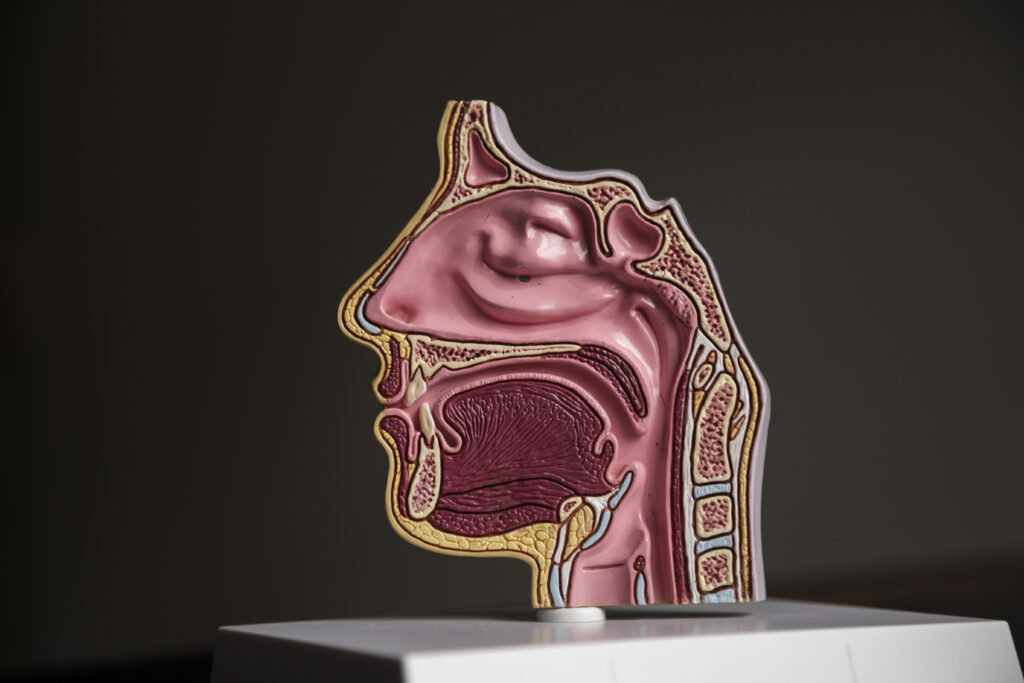
And nowhere is this more evident than in the anatomy of the nostril.
1. Your Nose Is Not Random—It Is Environmental Memory
The shape and configuration of the nasal passage are not accidental. They are the result of generations of adaptation to environmental pressures such as:
- Temperature.
- Humidity.
- Air density.
- Particulate composition.
Across time, populations exposed to different atmospheric conditions developed nasal structures that optimise survival within those conditions.
This means your nostril is not just yours. It is a biological memory of environments long before your birth.
2. What Nasal Structure Actually Controls
The structure of the nasal passage determines how air behaves once it enters.
This includes:
- Air Resistance, of how much effort is required to breathe.
- Flow Patterns, of whether airflow is smooth (laminar) or chaotic (turbulent).
- Thermal Conditioning, of how effectively air is warmed and humidified.
- Particle Contact, of how intensely environmental particles interact with sensory surfaces.
These are not minor variables. They define:
How the environment is delivered to your nervous system.
3. The Psychextric Shift: You Inherit Exposure, Not Just Traits
Traditional biology focuses on inherited traits. Psychextrics reframes this:
You do not just inherit what you are. You inherit how the world reaches you.
This is what defines Anatomy as Inherited Exposure.
The organism enters the world with a pre-configured interface—a built-in system that determines:
- How much of the environment is admitted.
- How it is conditioned.
- How it is distributed internally.
Before experience begins, the mode of exposure is already set.
4. The Myth of Perfect Design
There is a common assumption that biology is optimally designed. That evolution produces perfectly aligned systems. Psychextrics rejects this.
Evolution is not precision engineering. It is bricolage—a layering of traits, often in tension with one another.
This means:
- GIM–HIM (internal processing architecture).
- EIM–HFI (interface and environmental modulation).
are inherited—but not always as a synchronised system.
And when they are not aligned, something critical happens.
5. The Hybrid Architecture Problem
One of the most profound sources of behavioural divergence lies in inherited mismatch. An individual may inherit:
- The internal engine (GIM–HIM) from one lineage.
- The environmental interface (EIM) from another.
These components do not always match. The result is a hybrid architecture—a system where intake and processing are not synchronised. This produces behaviour that resembles neither parent.
Mismatch Case 1: Temperature–Humidity Conflict
Consider an individual who inherits:
- A GIM calibrated for high-energy output in stable, temperate environments.
- A nasal EIM calibrated for high humidity and rapid airflow (wide nasal passages).
The result:
- Air enters too quickly.
- It is not properly conditioned (warmed/humidified).
- The internal system receives a distorted thermal signal.
The behavioural outcome is not stability. It is chronic restlessness. The system behaves as though it is under constant environmental stress—even when it is not.
Mismatch Case 2: Sensory Overexposure
Now consider:
- A nasal structure that produces turbulent airflow, increasing particle contact.
- A HIM with low tolerance for sensory stimulation.
The result:
- The environment is amplified beyond manageable levels.
- Signals are too intense for the system to stabilise.
The behavioural outcome:
- Hyper-reactivity.
- Irritability.
- Environmental sensitivity.
The individual is not “overly emotional.” They are overexposed by design.
6. Expanding the Model: Additional Mismatch Conditions
Beyond these examples, multiple conditions can arise within the Intake Spectrum alone:
A. Air Resistance Mismatch
- High nasal resistance with low HIM energy results in Chronic fatigue, low drive, lethargy.
B. Over-Efficiency Mismatch
- Highly efficient intake with high HIM reactivity results in Anxiety, overstimulation, inability to settle.
C. Thermal Instability Mismatch
- Poor air conditioning with high GIM processing demand results in Erratic behaviour, irritability, unstable emotional states.
D. Underexposure Mismatch
- Restricted airflow with high cognitive capacity results in Blunted perception, low engagement, reduced behavioural expression.
E. Particle Saturation Mismatch
- High particulate exposure with low tolerance threshold results in Avoidant behaviour, environmental phobia, neurotic patterns.
7. The Pre-Configured Mode of Exposure
These conditions reveal a deeper truth:
The organism does not enter the world as a neutral receiver. It enters with a pre-configured mode of exposure.
If the intake architecture (EIM) is misaligned with the processing architecture (GIM–HIM), then:
- Behaviour becomes constrained.
- Expression becomes distorted.
- Potential becomes inaccessible.
It is not that the individual lacks capability. It is that their interface cannot support their engine.
8. The Engine and the Intake Manifold
A useful analogy:
The GIM–HIM is the engine.
The EIM is the intake manifold.
A high-performance engine with a restricted or mismatched intake:
- Cannot operate at full capacity.
- Produces unstable output.
- Experiences internal strain.
The same applies to behaviour.
9. The Psychextric Law of Mismatch
This leads to a defining principle:
When the Architecture of Intake is not synchronised with the Architecture of Meaning, behaviour becomes a third expression.
This third expression:
- Does not resemble inherited patterns.
- Does not align with environmental expectations.
- Exists as a unique, often stressed trajectory.
It is not disorder. It is misalignment.
10. Why Behaviour Is So Diverse
This framework explains why behavioural diversity is so vast. We are not just observing:
- Different personalities.
- Different experiences.
We are observing:
The success or failure of inherited interfaces.
The way you express:
- Calmness.
- Fear.
- Energy.
- Withdrawal.
is shaped by how your anatomy admits the world.
Conclusion: You Were Designed to Meet a World That May No Longer Exist
Your nasal structure was shaped by environments of the past. But you live in the present. And when these two do not align, behaviour shifts.
Not because you chose it. But because: You inherited a way of meeting the world that the world no longer matches. And every breath you take is a reminder of that negotiation.
Back to: 👇