
When Defence Becomes Performance: Psychological Defence and the Failure to Halt a Contaminated Trial
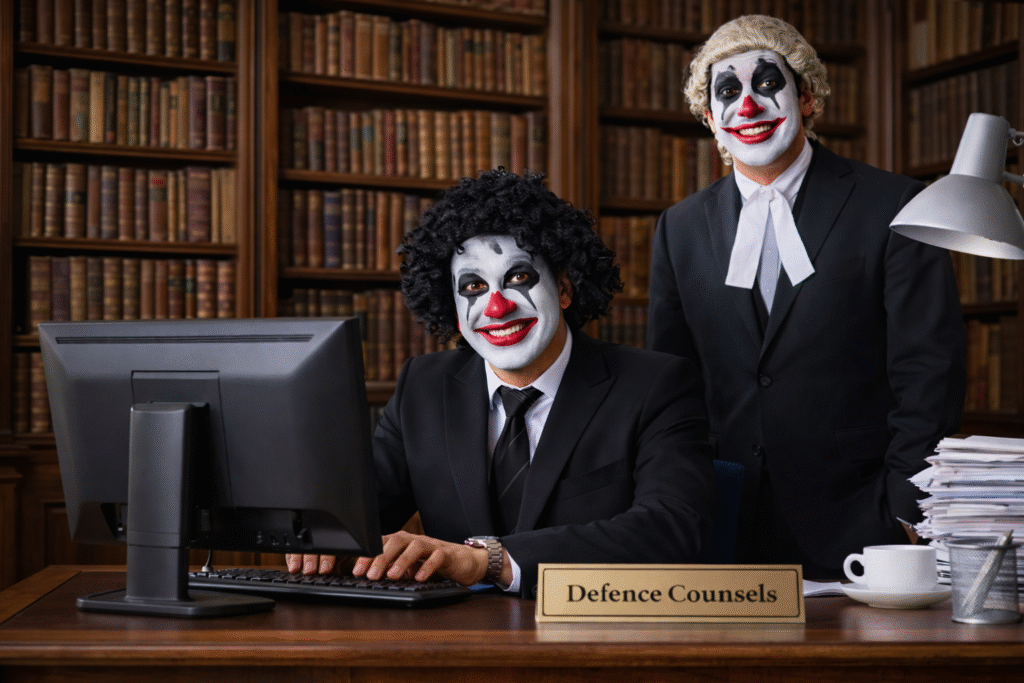
BY: OMOLAJA MAKINEE
In criminal justice discourse, criticism typically focuses on police and prosecutors. Rarely is attention directed toward the defence. Yet the defence occupies a constitutional role just as vital as any other actor in the courtroom. It is the final institutional safeguard between the individual and the coercive power of the State.
In Opinion Over Truth, one of the most troubling themes is not only what the prosecution did, but what the defence did not do.
The question is stark: what happens when the defence adopts a psychological posture rather than a structural one? When it manages perception instead of confronting procedural illegality? When it adapts to the narrative rather than challenging its admissibility?
That is where justice begins to fracture.
1. The First Day That Should Not Have Happened
A criminal trial is not merely a performance before a jury. It is the culmination of pre-trial scrutiny. By the time a case is opened, admissibility, disclosure, and evidential integrity should already have been rigorously examined.
In my case, the trial proceeded on its first day without a foundational issue being resolved: the integrity and completeness of video footage relied upon by the prosecution.
The footage that would later form a core plank of the prosecution case had not been properly examined in its full and authentic form prior to trial commencement. Crucially, aspects of the content—including audio characteristics—were not understood or explored in the way that fairness required.
If evidential contamination exists, the trial should pause. If the defence has not had full and meaningful opportunity to forensically examine material relied upon, the trial should not begin. If the accused has not been confronted with the true evidential form during interview, the trial court must interrogate that discrepancy.
The first day of trial is not a ceremonial starting gun. It is a constitutional checkpoint. When that checkpoint fails, everything that follows rests on unstable ground.
2. Psychological Defence Versus Structural Defence
There is a difference between defending psychologically and defending structurally.
Psychological defence seeks to:
- Manage jury perception.
- Mitigate reputational damage.
- Reframe allegations.
- Soften impact.
Structural defence seeks to:
- Challenge admissibility.
- Contest procedural breaches.
- Halt proceedings where legal thresholds are unmet.
- Exclude unlawfully obtained or contaminated evidence.
In the narrative documented in this book, what emerged felt closer to psychological defence.
Rather than halting the trial to address foundational evidential irregularities, the defence appeared to proceed within the prosecution’s narrative architecture—arguing inside it, rather than dismantling it.
But if the foundation is compromised, argument within the structure merely reinforces its legitimacy.
What compounded this was my own procedural literacy. I understood court decorum. I understood hierarchy. I understood that a litigant does not interrupt the judge. I understood that a represented defendant does not seize the floor. I understood that emotional restraint is interpreted as maturity, and that reverence toward the bench is part of the cultural grammar of justice.
So I sat. I waited. I deferred. I reserved objections in my mind, believing they would be raised by those appointed to raise them. I internalised the discipline of silence—positioned too distant to my barrister and deprived of any chance to whisper instructions where permitted, suppressing impulse, trusting structure. I had learned that to interrupt proceedings is to appear disruptive; to speak out of turn is to risk rebuke; to challenge openly is to jeopardise credibility. That discipline worked against me.
There is a paradox here. Procedural literacy teaches compliance with form. It teaches that the system has internal mechanisms to correct itself. It teaches patience, respect, and the choreography of deference. But when the structure itself drifts—when evidential foundations are not tested, when irregularities pass unchallenged—silence becomes complicity by default.
Had I lacked that literacy—had I been less conditioned by decorum, less culturally inclined toward reverence of authority and elders—my instinct might have been to interrupt. To insist. To refuse continuation until foundational issues were addressed. Such conduct may have been frowned upon, perhaps even sanctioned—but it might also have forced visibility upon what remained procedurally submerged.
Instead, emotional maturity and structural trust became forms of learned helplessness. The adversarial system assumes that counsel will act as the defendant’s voice. When that assumption falters, the represented party is paradoxically constrained from self-correction. To speak risks reprimand. To remain silent risks misrepresentation. The courtroom’s architecture privileges order over interruption, even where interruption may be the only alarm available to the accused.
Who, then, is to blame? The question is not personal. It is structural. When psychological methods dominate—narrative framing, strategic containment, momentum over interruption—form can eclipse substance. Respect for procedure becomes a cage rather than a safeguard. The system rewards composure and penalises disruption, even where disruption may be the only response to structural imbalance.
In such a climate, the fault does not lie with reverence, nor with temperament, nor with a defendant’s attempt to honour the court. It lies in the elevation of psychological management over structural correction.
Justice cannot depend on who is bold enough to interrupt. It must depend on structures robust enough to correct themselves without requiring the accused to breach decorum in order to be heard.
3. The Contaminated Footage Problem
The issue of footage integrity was not peripheral. It went to the heart of reliability.
Where:
- Audio presentation at trial differed from how it had been presented during interview;
- Portions of recordings were muted during questioning;
- Contextual segments were omitted;
a serious admissibility question arises.
The defence has both the authority and the obligation to insist upon:
- Full forensic examination.
- Continuity verification.
- Authenticity confirmation.
- Judicial ruling before exposure to a jury.
The jury must never be the first body to encounter disputed evidence in its operational form. Once a jury sees something, the psychological imprint is immediate. Even if later excluded or qualified, the impression cannot be erased.
The first safeguard is prevention.
4. The Failure to Confront Statutory Boundaries
Sections 101 and 107 of the Sexual Offences Act 2003 impose specific statutory boundaries in relation to evidential and procedural matters during proceedings. These provisions are not ornamental. They exist to regulate fairness and prevent prejudice.
Where statutory safeguards are engaged, defence counsel must do more than reference them. They must insist upon compliance. If statutory limits are breached in the way evidence is introduced or characterised, the defence must:
- Demand judicial ruling.
- Seek exclusion.
- If necessary, invite adjournment.
A trial proceeding in the shadow of statutory breach undermines not only the defendant’s position but the legitimacy of the verdict itself. When defence representation does not robustly enforce statutory boundaries, the imbalance between State and individual widens.
5. The Culture of Deference
Why might a defence allow a trial to proceed when structural concerns remain unresolved?
The answer may lie in legal culture. Criminal courts operate within rhythms and expectations. There is pressure not to delay. There is reluctance to challenge judicial management decisions aggressively. There is professional caution about appearing obstructive.
But constitutional defence is not obstruction. It is the adversarial system functioning properly. When defence representatives internalise courtroom efficiency as a priority over evidential integrity, the psychological shift is subtle but consequential. The defence begins adapting to the process rather than interrogating it.
6. The Consequence of Not Stopping the Clock
The most powerful tool available to a defence lawyer is not cross-examination. It is timing. Stopping proceedings. Challenging admissibility before exposure. Forcing structural scrutiny.
If contaminated or disputed material reaches the jury before resolution, the damage is done. The jury does not analyse admissibility doctrine. It absorbs impression.
If the defence does not prevent that exposure, the trial becomes reactive rather than protective.
7. Psychological Containment of the Accused
Another dimension of psychological defence is the management of the accused.
When counsel frames irregularities as tactical disadvantages rather than constitutional violations, the accused may be encouraged to focus on narrative rebuttal rather than structural challenge.
This shifts the battle from law to persuasion. But persuasion cannot cure procedural defect. A defendant should not have to rely on rhetorical skill to survive structural imbalance. The system is designed so that safeguards operate before persuasion begins.
8. The Broader Democratic Concern
This issue extends beyond any single case. If defence culture drifts toward accommodation rather than confrontation:
- Procedural breaches become normalised.
- Judges face fewer robust challenges.
- Prosecutorial framing encounters less resistance.
- Structural unfairness becomes embedded.
The adversarial system relies on tension. Without that tension, the system leans toward the State by default. The defence is not merely a participant. It is the counterweight. When that counterweight weakens, justice tilts.
9. The Illusion of Representation
From the outside, representation itself creates reassurance. A defendant “had a lawyer.” Therefore, fairness is presumed. But representation is not binary. It exists on a spectrum.
Did counsel:
- Examine every piece of digital evidence in its authentic form?
- Challenge discrepancies before trial commencement?
- Invoke statutory protections forcefully?
- Seek to halt proceedings pending clarification?
If not, representation becomes procedural rather than protective. The appearance of defence cannot substitute for its function.
Conclusion: The Duty to Stop the Trial
The central argument here is not to propagate that defence representatives are malicious. It is that systemic culture can dilute constitutional duty.
When a trial proceeds despite unresolved evidential contamination, when statutory safeguards are not fully enforced, when psychological adaptation replaces structural confrontation, the defence becomes part of the architecture it is meant to challenge.
In Opinion Over Truth, the tragedy is not only that opinion overtook fact. It is that the safeguards designed to prevent that outcome did not activate with sufficient force.
The first day of trial should be a threshold of certainty, not a leap of faith. If the defence does not insist upon that certainty, the adversarial system becomes unbalanced. And when balance fails, the verdict—whatever it may be—rests on foundations that were never properly tested or biased at the foundation.
Back to👇