
The Behavioural Display Interface: How the Telencephalon Reveals the Integrated Reality of the Somato-Valence Engine
The Final Cephalon of the Cognito-Recursive Axis
BY: OMOLAJA MAKINEE
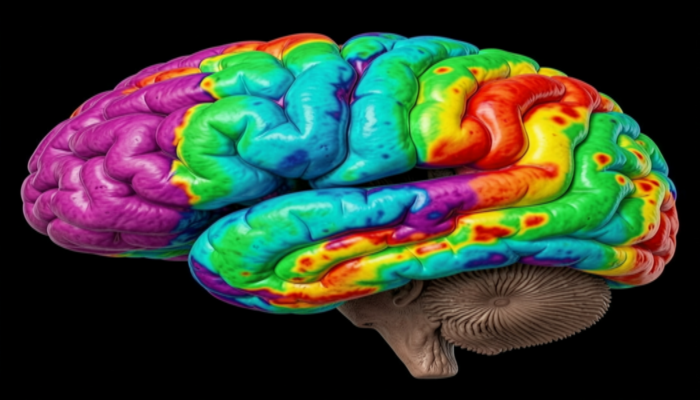
At the summit of the six-cephalon architecture emerges the final display territory following behavioural construction: The Telencephalon.
Within classical Neuroscience, the Telencephalon became burdened with contradictory responsibilities. It was simultaneously treated as the creator of behaviour, the seat of consciousness, the repository of memory, the source of emotion, the generator of thought, and the architect of identity.
Psychextrics rejects this compression. The Telencephalon does not create behaviour. It does not generate emotional intensity. It does not package memory. It does not construct meaning. Those responsibilities belong to the lower cephalic territories.
Instead, the Telencephalon performs a singular function:
It displays the finished product.
Within the revised six-cephalon model, the Telencephalon serves as the Behavioural Display Interface.
- It is the conscious screen.
- The rendering surface.
- The symbolic projector.
The awareness field upon which the integrated work of the lower five cephalons becomes visible.
If the Siencephalon acts as the hidden compiler beneath consciousness, the Telencephalon acts as the visible theatre above it. One assembles behavioural reality. The other reveals behavioural reality. Together they form the Cognito-Recursive Axis.
1. The Final Destination of Behaviour
Every behavioural signal travelling through the cephalic hierarchy eventually arrives at the same destination.
The Telencephalon.
The journey begins in the lower territories.
- The Myelencephalon establishes biological viability.
- The Metencephalon secures movement.
- The Mesencephalon establishes orientation.
- The Diencephalon assigns symbolic meaning.
- The Siencephalon packages behavioural experience into continuity.
Only then does the Telencephalon illuminate.
By the time conscious awareness emerges, behavioural reality has already been constructed. The conscious field therefore does not represent behavioural creation. It represents behavioural revelation.
The organism does not become conscious in order to generate reality. The organism becomes conscious in order to witness reality already generated.
This distinction forms one of the central architectural reversals introduced by Psychextrics.
2. The Conscious Screen
The revised Telencephalon consists primarily of display systems.
- Sensory display cortexes.
- Associative display fields.
- Symbolic rendering surfaces.
- Conscious awareness interfaces.
These structures perform the same fundamental task regardless of sensory modality. They transform integrated behavioural packages into conscious experience.
- The visual cortex displays visual reality.
- The auditory cortex displays auditory reality.
- The somatosensory cortex displays bodily reality.
- Associative territories display symbolic and linguistic reality.
Together these regions create the conscious field.
However, the conscious field is not the source of behavioural reality. It is the projection surface upon which behavioural reality appears.
The screen does not create the movie. The screen displays the movie.
3. The Necessity of Feedback
Yet the Telencephalon performs a second function that is equally important. Display alone would be insufficient. A screen that only receives information would remain biologically passive. Instead, the Telencephalon participates in a recursive feedback system.
What is received from the external environment following display must be reported back to the lower structures. Reality must not simply be shown. Reality must be validated through a Feedback loop of consciousness.
This requirement gives rise to one of the most important mechanisms within the Cognito-Recursive Axis:
The Cortico-Thalamic Feedback Matrix.
4. Layer VI and the Feedback Loop of Consciousness
The key anatomical structure governing this process is Layer VI of the cortex.
Within traditional Neuroscience, descending cortical pathways are often interpreted as evidence of executive control. Psychextrics offers a different interpretation.
Layer VI does not function as a sovereign commander. It functions as a feedback regulator. Once behavioural reality appears upon the conscious screen, Layer VI immediately broadcasts information back into the lower hierarchy. This descending broadcast informs the lower systems about what has been received in feedback from the external environment following display.
The process resembles a mirror.
- The lower cephalons generate behaviour.
- The Telencephalon displays behaviour.
- Layer VI reports what it receives in feedback following the display back to the lower cephalons.
Behaviour becomes self-observing. The nervous system gains the capacity to compare prediction against outcome.
This is the foundation of recursive consciousness.
5. The Direct Contextual Tuning Pathway
The first major feedback route runs directly back into the Thalamus. Layer VI neurons project downward toward the same thalamic territories that originally supplied the ascending information to Layer IV.
This creates a reciprocal loop.
- The Thalamus informs the cortex.
- The cortex informs the Thalamus.
Through this arrangement, behavioural relevance becomes continuously recalibrated. The cortex effectively acts as a focusing lens.
Important signals become sharper. Irrelevant signals become muted. Background interference becomes suppressed. The system continuously adjusts itself according to what is received from the external environment following what is being displayed.
This process creates the subjective experience of focused awareness. Yet the awareness itself remains a consequence rather than a cause.
6. The PVT Interlock
A second pathway provides an even deeper level of influence. Layer VI projects directly toward the Paraventricular Thalamic Nucleus.
The PVT occupies a unique position within the Diencephalon. It serves as the integration gateway through which the major diencephalic quadrants converge. Because of this strategic position, feedback arriving at the PVT gains access to the entire Somato-Valence Engine.
The Telencephalon therefore acquires a mechanism through which conscious display can influence future behavioural weighting. Not by commanding. Not by controlling. But by recalibrating.
When behavioural intensity rises too high, Layer VI informs the PVT. The PVT subsequently adjusts its signalling toward the Siencephalon. The emotional volume of future integrations becomes scaled. The behavioural signal becomes stabilised.
The conscious screen therefore participates in regulation without becoming the author of regulation.
7. The Recursive Stabilisation Loop
This arrangement produces one of the defining features of human consciousness. The ability to learn from experience.
- The Somato-Valence Engine generates behavioural impulses.
- The Siencephalon packages those impulses into indexed continuity.
- The Telencephalon displays the outcome.
- The received outcome is then fed back into the Diencephalon and Siencephalon.
The next behavioural package is modified accordingly. The cycle repeats endlessly.
- Behaviour generates display.
- Display generates feedback.
- Feedback modifies future behaviour.
This recursive loop forms the living architecture of behavioural adaptation.
Without it, learning would collapse. Prediction would fail. Behavioural refinement would become impossible.
8. The Illusion of Emotional Self-Regulation
One of the most persistent experiences of human consciousness is the feeling of regulating one’s own emotions. Individuals routinely report:
“I calmed myself down.”
“I controlled my anger.”
“I managed my fear.”
From the perspective of Psychextrics, these experiences are genuine. However, their interpretation is incomplete.
The conscious screen observes emotional intensity being reduced. The Telencephalon subsequently displays narrative ownership of the process. But whose voice is behind this ownership of behaviour?
Yet the biological scaling occurs within the lower systems.
Layer VI sends feedback. The PVT adjusts diencephalic signalling. The Siencephalon modifies future integration priorities. The emotional wave decreases. The conscious screen witnesses the result. The thalamic narration then claims authorship.
This creates the powerful subjective impression that the conscious self directly executed emotional regulation. In reality, the Telencephalon is witnessing a recursive recalibration occurring beneath awareness.
9. The Behavioural Signal Escalation Ladder
The behavioural signal therefore ascends through a strict hierarchy:
- The Myelencephalon establishes survival.
- The Metencephalon stabilises movement.
- The Mesencephalon directs attention.
- The Diencephalon assigns meaning.
- The Siencephalon integrates continuity.
- The Telencephalon displays the finished behavioural reality.
Once displayed, the process reverses.
- The Telencephalon broadcasts feedback.
- The Diencephalon rescales significance.
- The Siencephalon updates behavioural continuity.
- Future outputs become modified.
The cephalic hierarchy therefore functions simultaneously as an ascending construction system and a descending validation system.
The upward flow builds behavioural reality. The downward flow stabilises behavioural reality. Together they create continuity.
10. The Final Role of the Telencephalon
When viewed through the lens of Behavioural Architecture, the role of the Telencephalon becomes unmistakably clear.
- It is not the creator of behaviour.
- It is not the architect of emotional intensity.
- It is not the source of memory.
- It is not the engine of meaning.
Instead, it serves as the final interface between integrated biological reality and conscious awareness.
- It displays.
- It illuminates.
- It reflects.
- It feeds back.
Its purpose is not construction. Its purpose is revelation.
Conclusion: The Screen at the End of the Ladder
The six-cephalon architecture culminates in the Telencephalon because every behavioural system ultimately requires a display surface.
- The lower cephalons construct behavioural possibility.
- The Diencephalon transforms possibility into meaning.
- The Siencephalon transforms meaning into continuity.
- The Telencephalon transforms continuity into conscious experience.
Yet its task does not end there.
The conscious screen becomes a mirror. Through Layer VI and the Cortico-Thalamic Feedback Matrix, every received experience is returned to the lower systems for refinement, recalibration, and future adaptation.
The Telencephalon therefore stands as the final territory of the Cognito-Recursive Axis. Not the sovereign ruler of behaviour. Not the author of reality. But the illuminated surface upon which the completed work of the entire cephalic hierarchy finally becomes visible.
It is the screen at the end of the ladder. The window through which behaviour witnesses itself.
Back to: 👇