
Rescuing the Entorhinal from Its Linguistic Inertia: Reclassifying the Gateway of Behavioural Continuity
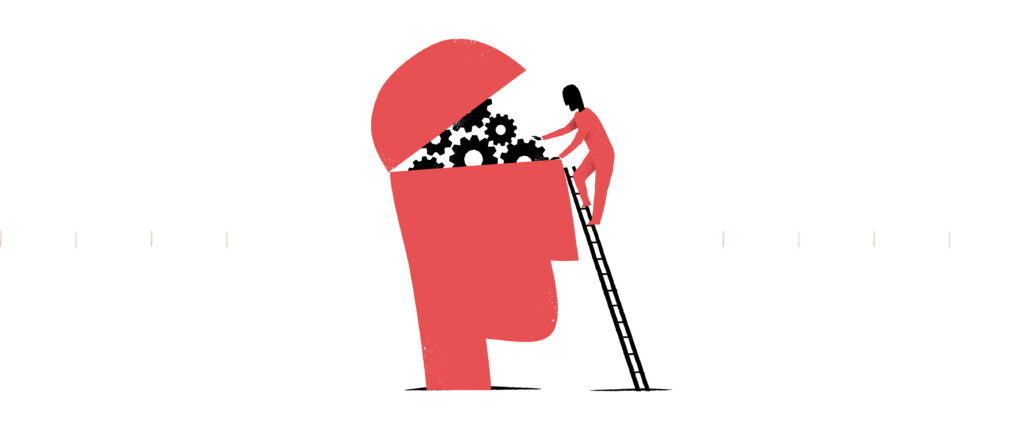
When a Name Becomes a Cage
BY: OMOLAJA MAKINEE
Scientific progress is often slowed not by the absence of evidence, but by the persistence of language.
Entire paradigms can become trapped inside terminology inherited from earlier generations. Once a structure receives a name, the name gradually becomes more than a label. It becomes an assumption. It begins to dictate how the structure is interpreted, how it is studied, what questions are asked about it, and even what possibilities researchers are willing to entertain.
Throughout the history of Neuroscience, numerous structures have suffered from this phenomenon. Anatomical descriptions have repeatedly evolved into functional doctrines. Topographical labels have quietly transformed into theoretical boundaries.
Under Psychextrics, few structures illustrate this problem more dramatically than the Entorhinal region.
For over a century, the Entorhinal has existed in a peculiar state of conceptual confinement. Because it occupies a position adjacent to the rhinal sulcus and resides within a territory historically associated with olfaction and allocortex, it became linguistically anchored to a category that fails to describe its actual operational behaviour.
The consequence has been profound.
- A structure that behaves like a routing infrastructure has been described as though it were a cortex.
- A structure that behaves like a relay has been described as though it were a display field.
- A structure that continuously packages behavioural continuity has been interpreted as a transitional strip of tissue.
Psychextrics proposes that this contradiction emerges from linguistic inertia rather than anatomical reality.
The Entorhinal must therefore be rescued from its inherited vocabulary before its true role can be understood.
1. The Historical Accident of Topographical Naming
Classical neuroanatomy evolved primarily through observation. Structures were named according to visible landmarks.
- Sulci.
- Gyri.
- Boundaries.
- Neighbouring territories.
- Relative positions.
This approach proved enormously valuable for anatomical cataloguing. However, it also created an unintended problem. Location gradually became confused with function.
Because the Entorhinal sits near the rhinal sulcus, it inherited a linguistic identity tied to that geography. Its name literally reflects this relationship. The result was subtle but powerful.
Researchers unconsciously began viewing it as an accessory structure associated with neighbouring sensory territories. The anatomical coordinate became the conceptual destiny. The structure was classified according to where it sat rather than what it did. Over time this interpretation hardened into doctrine.
The Entorhinal became increasingly described as a transitional cortical region situated between neocortex and hippocampus.
- Its role was acknowledged.
- Its importance was recognised.
Yet its true operational identity remained hidden beneath its inherited terminology.
2. The Problem with Classical Cortical Classification
The traditional classification of the Entorhinal as a cortical structure creates a fundamental contradiction. True display cortexes share a common behavioural characteristic. They display.
- Whether visual.
- Auditory.
- Somatosensory.
- Motor.
- Symbolic.
- Or reflector.
Display cortexes function as projector surfaces. They reveal information.
- They do not route information.
- They do not package information.
- They do not recursively redistribute information.
They are behavioural endpoints.
The revised Telencephalon follows this principle.
- Primary visual cortex displays vision.
- Primary auditory cortex displays sound.
- Language areas display symbolic narration.
- Orbitofrontal regions display behavioural valuations.
Even the piriform cortex follows the same rule. Despite its phylogenetic age, it functions as a sensory display interface for smell.
The Entorhinal does none of these things.
- It possesses no sensory canvas.
- It generates no symbolic narration.
- It projects no conscious image.
- It renders no behavioural scene.
Instead, it compresses signals.
- Routes signals.
- Packages signals.
- Indexes signals.
- Receives signals.
- Rebroadcasts signals.
Its operational profile resembles a switching infrastructure rather than a display field.
The contradiction becomes impossible to ignore.
- If the defining characteristic of cortex is representation, then the Entorhinal behaves unlike a cortex.
- If the defining characteristic of a relay is routing, then the Entorhinal behaves precisely like a relay.
3. The Separation of Display and Relay Architecture
Psychextrics resolves this contradiction through a strict architectural distinction. Display systems and relay systems belong to fundamentally different operational categories.
- Display systems exist to reveal. Relay systems exist to integrate.
- Display systems project experience. Relay systems construct continuity.
- Display systems are endpoints. Relay systems are infrastructure.
Under this framework, the revised Telencephalon remains the principal display architecture of consciousness. The piriform cortex remains an olfactory display field. The Entorhinal becomes something entirely different. The Entorhinal Relay.
This change is not semantic ornamentation. It is a functional correction. The revised terminology aligns the structure with its actual computational behaviour.
Once viewed through this lens, numerous longstanding contradictions disappear. The Entorhinal no longer appears anomalous. Its behaviour becomes entirely consistent with relay architecture.
4. The Historical Trail Toward Reclassification
Interestingly, Neuroscience itself has repeatedly uncovered evidence pointing toward this conclusion. The evidence emerged gradually across more than a century. The terminology simply failed to keep pace.
Brodmann’s Architectural Discovery
In 1909, Korbinian Brodmann isolated the region as Area 28. His achievement was architectural rather than behavioural. The region was recognised as distinct. Yet its role remained undefined.
The structure was identified. The infrastructure remained misunderstood.
Ramón y Cajal and the Perforant Path
Early anatomical investigations revealed extensive projections into hippocampal territory. These findings exposed the input side of what Psychextrics now interprets as a relay loop.
The Entorhinal was already revealing its true identity. The language simply had not evolved enough to recognise it.
The Discovery of the Neocortical Bottleneck
During the 1970s, researchers demonstrated that high-level cortical streams passed through the Entorhinal before reaching hippocampal systems. This was a crucial clue.
Display systems do not normally serve as mandatory routing bottlenecks. Relay systems do. The Entorhinal was behaving increasingly like infrastructure.
The Discovery of Grid Cells
Perhaps the most decisive evidence emerged in 2005. The identification of grid cells demonstrated that the Entorhinal calculates spatial metrics rather than symbolic representations.
Grid cells do not describe reality.
- They compute coordinates.
- They calculate navigational vectors.
- They organise spatial continuity.
This is relay behaviour. Not display behaviour.
The Entorhinal was revealing itself as a computational switchboard rather than a sensory canvas.
5. The Alzheimer’s Vector and the Collapse of Continuity
The pathology of Alzheimer’s disease offers another revealing insight. The earliest degeneration frequently appears within Entorhinal systems.
Importantly, the first symptoms are rarely failures of primary sensation. Patients continue seeing. Hearing. Feeling. Speaking. The display apparatus remains largely intact. What begins to fail is continuity.
- Spatial orientation deteriorates.
- Contextual integration collapses.
- Navigation fragments.
- Historical indexing weakens.
The individual becomes disconnected from the continuity architecture that binds present experience to past experience. This pattern makes perfect sense under the relay model.
If a display cortex fails, perception collapses. If a relay fails, continuity collapses. Alzheimer’s initially resembles the latter far more than the former. The disease attacks the switching infrastructure.
The display screen remains operational while the routing network gradually disintegrates beneath it. The conscious narrator is left attempting to explain a world whose continuity can no longer be stabilised.
6. The Entorhinal as the Master Relay of the Siencephalon
Once liberated from its cortical classification, the Entorhinal assumes a far more coherent position within the six-cephalon architecture. It becomes the Siencephalon’s master relay.
The structure responsible for:
- Behavioural compression.
- Continuity routing.
- Indexing transfer.
- Recursive rebroadcasting.
- Signal stabilisation.
- Historical integration.
- Behavioural positioning.
It stands between experience and continuity. Between perception and indexing. Between the present and the historical record.
The Entorhinal does not merely support memory. It operationalises memory continuity itself. Every moment of behavioural reality must pass through its recursive loops before it can be woven into the organism’s ongoing narrative.
Conclusion: From Transitional Cortex to Behavioural Switchboard
The reclassification of the Entorhinal represents more than a terminological adjustment. It represents a fundamental shift in how behavioural continuity is understood.
Traditional Neuroscience inherited a topographical label and gradually built a functional interpretation around it.
Psychextrics reverses the process. Function comes first. Location comes second.
When the Entorhinal is judged according to what it actually does, its identity becomes difficult to ignore.
- It does not behave like a display-cortex. It behaves like a relay.
- It does not represent experience. It routes experience.
- It does not generate awareness. It stabilises the continuity that awareness later witnesses.
Rescuing the Entorhinal from its linguistic inertia therefore rescues an entire dimension of Behavioural science.
The organism is no longer viewed as generating behaviour upon a cortical surface. Instead, behaviour emerges from a deep relay infrastructure where biological inheritance, behavioural indexing, emotional weighting, and historical continuity are assembled long before consciousness arrives.
The Entorhinal Relay stands at the centre of that infrastructure.
- Not as a passive strip of cortex.
- Not as an olfactory accessory.
But as the master switchboard through which behavioural continuity becomes possible.
Back to: 👇