
Negflation and Posflation: Regulating Value Beyond Money
BY: OMOLAJA MAKINEE
Introduction: From Monetary Distortion to Post-Monetary Regulation
Modern economic thought has been almost entirely imprisoned within a monetary imagination. Inflation and deflation—rising and falling prices—are treated as the natural laws of economic life, as if value itself were inseparable from money. Yet inflation and deflation are not universal economic phenomena; they are artefacts of a monetary system. They arise only where money is the primary mediator of access, distribution, and survival.
Ethnocorporatism, as articulated across the volumes of this manifesto, does not merely reform monetary economics—it transcends it. In doing so, it demands an entirely different vocabulary of regulation. Negflation and posflation emerge not as monetary analogues, but as post-monetary instruments designed to regulate access, entitlement, and provision within a non-monetary economy.
Where inflation and deflation regulate prices, negflation and posflation regulate conditions of availability. Where monetary systems respond to aggregate demand, non-monetary systems respond to on-demand provisioning. This is not a semantic shift—it is a civilisational one.
1. Inflation and Deflation: The Limits of Monetary Logic
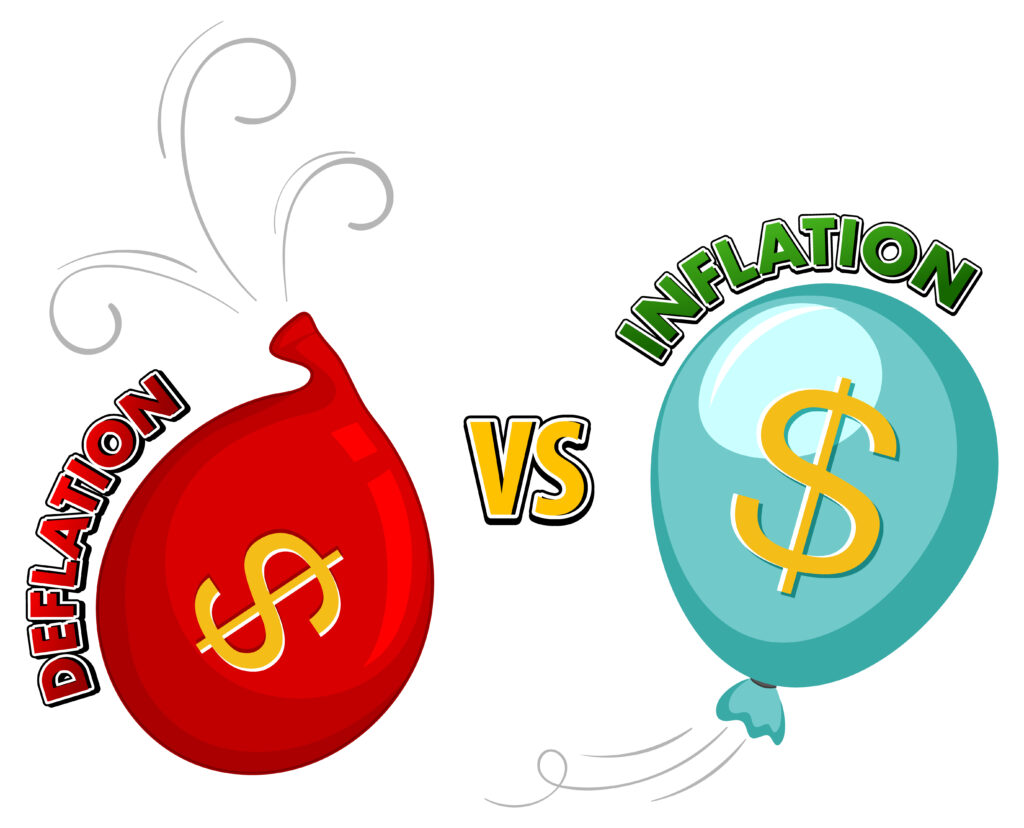
In a monetary economy, inflation occurs when too much money chases too few goods. Deflation occurs when money contracts, suppressing prices, wages, and economic activity. Both are treated as macroeconomic indicators, yet both are fundamentally symptoms of structural misalignment between human needs and monetary mediation.
Crucially, inflation and deflation operate impersonally. They punish and reward indiscriminately. Inflation erodes purchasing power regardless of contribution. Deflation freezes opportunity regardless of effort. Neither is capable of ethical discrimination. Neither understands human function, corposense, or social role.
Most critically, inflation and deflation regulate value retrospectively. They respond after distortion has already occurred. By the time inflation is “managed,” social damage is already embedded—in housing insecurity, labour exploitation, and systemic inequality.
This is precisely why monetary economies require constant emergency intervention, austerity cycles, and elite discretion. They cannot regulate human need directly; they can only manipulate money and hope behaviour follows.
2. The Non-Monetary Turn: From Demand to On-Demand
Ethnocorporatism rejects the abstraction of demand as an aggregate signal distorted by purchasing power. In its place, it introduces on-demand provisioning, a system in which access is regulated according to:
- functional contribution,
- social necessity,
- lifecycle position (working-age, pensioned, dependent),
- and collectively agreed baselines of dignity.
In this framework, goods are not “bought”; they are entitled, allocated, loaned, or provisioned. Scarcity is not signalled by price spikes but by access modulation. Surplus is not absorbed by speculative accumulation but by expanded provision.
This shift requires regulatory tools that operate without money. Negflation and posflation are those tools.
3. Defining Negflation
Negflation refers to the intentional expansion or upward adjustment of access conditions to goods, services, or entitlements in response to social need, surplus capacity, or technological efficiency.
Where posflation restrains, negflation liberates.
Examples include:
- Expanding entitlement categories as automation reduces labour dependency.
- Lowering access thresholds for housing, healthcare, or education.
- Increasing baseline material standards (e.g., larger home allocations, higher energy access).
- Accelerating pension eligibility as machine labour replaces human labour.
Negflation is the mechanism through which technological progress becomes social emancipation, rather than elite profit. It ensures that productivity gains translate into time, security, and well-being for the population—not into unemployment anxiety or precariousness.
4. Defining Posflation
Posflation refers to the intentional tightening or downward adjustment of access conditions to specific goods, services, or entitlements within a non-monetary economy.
Posflation does not mean “less for everyone.” It means controlled restraint where provision exceeds sustainability, fairness, or functional necessity.
Examples include:
- Reducing entitlement frequency for non-essential goods.
- Temporarily restricting access to high-resource items to working-group members only.
- Converting permanent entitlements into time-bound loan-entitlements.
- Increasing contribution thresholds for access to premium provisions.
Posflation operates surgically, not bluntly. It targets behaviour, not existence. It regulates use, not worth.
Importantly, posflation is not punitive. It is corrective. It prevents abuse without criminalisation, preserves system integrity without surveillance excess, and maintains equality without flattening human diversity.
5. Negflation and Posflation Are Not Opposites
Unlike inflation and deflation, negflation and posflation are not antagonistic forces. They are complementary regulators operating within a single ethical framework.
Inflation and deflation fight each other through monetary instability. Negflation and posflation balance each other through social calibration.
They can operate simultaneously across different sectors or region. One region may experience negflation (e.g., luxury resource consumption), while another experiences posflation (e.g., healthcare access). This multidimensional regulation is impossible in price-based systems.
NEGFLATION:
- Negation of qualitative inflation.
- A condition of sufficiency.
- Determined by the availability of resources and services on-demand.
- Signals that provision meets or exceeds need.
- Operates in a non-monetary economy by removing value pressure, not by lowering prices.
POSFLATION:
- Positing (asserting) qualitative inflation.
- A condition of scarcity.
- Determined by insufficient resources, labour, or productive capacity.
- Signals that on-demand exceeds provision.
- Operates in a non-monetary economy as a material warning signal, not a price signal.
Key Governing Principle:
Availability of resources determines negflation or posflation.
Not money, not prices, not speculation.
- Sufficiency results in Negflation
- Scarcity results in Posflation
This is not interchangeable and not symmetric with inflation/deflation in monetary systems.
Conceptual Anchor:
- Inflation / Deflation manipulate perceived value through money.
- Posflation / Negflation register material reality through provision.
Negflation does not mean “less activity” or “economic contraction.” It means value pressure collapses because sufficiency is achieved.
Posflation does not mean “rising prices.” It means scarcity is materially present and must be addressed through policy, allocation, or production expansion.
6. Governance Without Prices: Ethical Regulation at Scale
Negflation and posflation function within the broader architecture of govox-populi. They are not imposed technocratically; they are prescribed populocratically.
Citizenry-electorates and their working-group determine:
- what constitutes excess,
- what qualifies as necessity,
- when restraint is justified,
- and when expansion is owed.
This restores regulation to the people most affected by it. Decisions cannot be silently reversed by elites, nor distorted by capital flight or speculative pressure. Only the governed may recalibrate the conditions under which they live.
7. From Economic Cycles to Social Rhythms
Inflation and deflation create economic cycles that destabilise lives. Negflation and posflation create social rhythms that stabilise them.
Where monetary economies oscillate between boom and bust, non-monetary economies evolve through adaptive modulation—expanding where life demands it, contracting where sustainability requires it.
This is not stagnation. It is intelligent equilibrium.
Conclusion: Regulating Value Without Corruptibility
Negflation and posflation represent the final break from economic systems that mistake money for value and markets for morality. They regulate not through abstraction, but through collective intention.
By replacing price volatility with access calibration, ethnocorporatism dissolves the structural causes of inequality, exploitation, and artificial scarcity. By embedding these mechanisms within populocratic governance, it ensures they remain incorruptible—not because humans are perfect, but because power is distributed, reversible, and transparent.
Inflation and deflation belong to an age where survival was mediated by money. Negflation and posflation belong to an age where survival is mediated by society itself.
This is not economic theory. This is post-monetary civilisation design.
Back to: 👇