
The Hippocampal Reconstruction Engine: Why Memory Follows the Same Law as Cellular and Molecular Biology
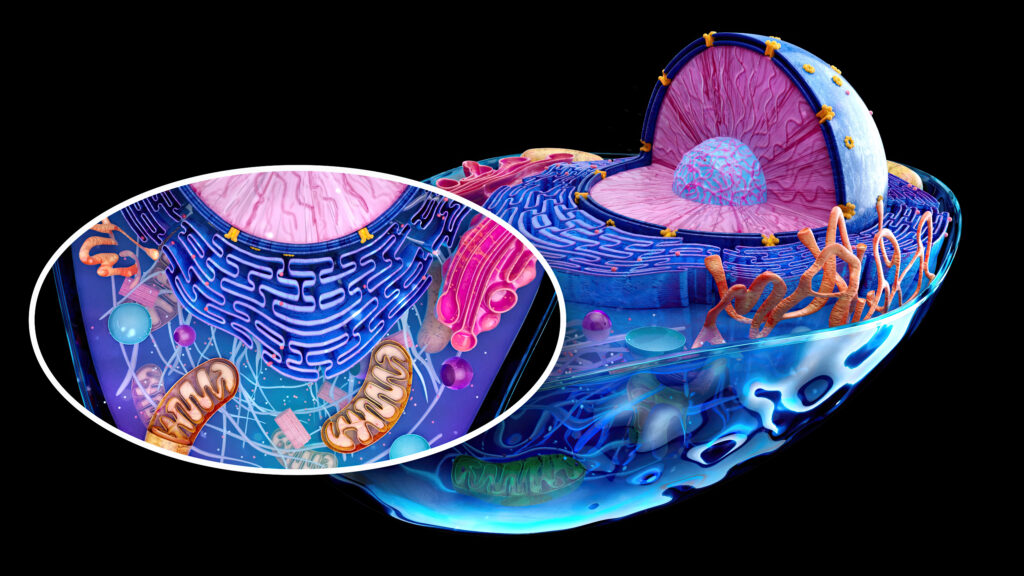
The Great Misunderstanding of Memory
BY: OMOLAJA MAKINEE
Modern Neuroscience frequently describes memory as though it were information stored inside the brain. Experiences are said to be encoded. Stored. Archived. Retrieved. The language itself reveals the underlying assumption.
- Memory is treated as a biological filing cabinet.
- A neurological library.
- A storage vault of preserved experiences waiting to be reopened by consciousness.
This interpretation appears intuitive because human beings naturally understand information through objects.
- Books are stored.
- Files are stored.
- Documents are stored.
- Photographs are stored.
Consequently, memory has been imagined as a neurological equivalent of these external technologies. Psychextrics rejects this framework.
- Memory is not storage. Memory is reconstruction.
- The hippocampus is not a passive archive. The hippocampus is an archive engine.
The systems traditionally described as memory structures do not preserve static copies of the past. Instead, they continuously rebuild behavioural reality from living biological components.
To understand why this is so, we must stop asking: “What information is stored?“
And begin asking: “What is biological-memory?“
The answer reveals that memory follows exactly the same organisational principles that govern cellular biology and molecular biology.
1. The Non-Archival Nature of Biological-Memory
The concept of storage originates from human administration. Archives exist because human beings require external systems to preserve information beyond the limits of biological life.
A document remains unchanged because paper is passive. A digital file remains unchanged because silicon is passive. Biological systems do not function in this manner. Nothing within living tissue exists as passive information.
- Everything exists as active structure.
- Everything exists as ongoing metabolism.
- Everything exists as dynamic adaptation.
The liver does not store instructions explaining how to detoxify blood. Its structure is the instruction.
The heart does not retrieve information explaining how to contract. Its organisation is the instruction.
The immune system does not consult an archive explaining how to respond to pathogens. Its biological configuration is the instruction.
The same principle applies to memory. The hippocampus does not retrieve experiences from storage. It reconstructs behavioural configurations from living biological architecture.
Memory therefore behaves less like a library and more like a living organ continuously rebuilding itself in response to present demands.
2. The Psychextric Law of Structural Equivalence
To understand this process, Psychextrics introduces a foundational principle. The Psychextric Law of Structural Equivalence. This law states:
“The cellular and molecular difference between biological organs lies solely in the scale of biological organisation.”
The significance of this principle extends far beyond memory. It proposes that every biological level follows identical organisational laws.
- Molecules organise into cells.
- Cells organise into tissues.
- Tissues organise into organs.
- Organs organise into behavioural systems.
The underlying logic remains constant. Only the scale changes.
A molecule does not contain instructions separate from itself. Its structure is its instruction. A cell does not contain a second cell explaining its function. Its structure is its function. Likewise, the hippocampus does not contain a hidden archive explaining behavioural history. Its structure is the memory trace.
- Its organisation is the memory.
- Its circuitry is the memory.
- Its reconstruction of behavioural reality is the memory.
Memory therefore exists not as stored content but as organised biological potential.
3. From Molecular Memory to Behavioural-Memory
The easiest way to understand this principle is to examine biology at its smallest scales.
At the molecular level, adaptive changes occur through receptor regulation, protein expression, methylation patterns, and synaptic modifications. These changes alter future biological responses. The organism does not retrieve a stored file. The organism behaves differently because its biological state has changed.
At the cellular level, the same principle applies. A cell’s future behaviour depends upon its current structure. Its past experiences become embedded within its biological organisation. The cell itself becomes a living memory of previous conditions.
The hippocampus follows exactly the same rule. Its subfields become organised according to previous behavioural encounters. The past is therefore not stored. The past is embodied. The past becomes part of the architecture itself. When reconstruction occurs, the hippocampus is not reopening history. It is expressing history.
4. The Allocortical Reconstruction Machine
This becomes particularly evident when examining the internal architecture of the hippocampus. Unlike the six-layered display surfaces of the revised Telencephalon, the hippocampus belongs to the ancient allocortex. Its architecture is specialised.
- Dense.
- Sequential.
- Recursive.
Every major signal entering the hippocampus must pass through a tightly organised reconstructive circuit.
The Entorhinal Gateway receives compressed behavioural reality. This reality enters the Dentate Gyrus.
- The Dentate Gyrus performs pattern separation.
- Similar experiences become distinguishable.
- Closely related events become individualised.
The signal then enters CA3. Here the architecture becomes radically different. CA3 contains extensive recurrent collateral networks. These loops permit partial behavioural fragments to reactivate larger behavioural patterns. A small cue can therefore reconstruct an entire historical configuration.
The signal then enters CA1. CA1 organises the reconstructed configuration into a coherent output.
Finally, the Subiculum broadcasts the completed reconstruction back into the wider nervous system through the fornical pathways.
This process resembles neither storage nor retrieval. It resembles assembly. The hippocampus continuously rebuilds behavioural reality from distributed biological traces.
5. Cellular Containers and Molecular Content
A second principle emerges from this architecture. Every reconstructive process contains two inseparable components.
- Structure,
- and adaptation.
Psychextrics refers to this relationship through the Law of Material Duality:
Cellular biology provides inherited organisation. Molecular biology provides adaptive content. The same principle governs hippocampal memory.
The hippocampal architecture provides the container. The adaptive modifications provide the content. The inherited organisation remains relatively stable. The adaptive modifications remain dynamic. Together they produce memory reconstruction.
The structural loop determines how reconstruction occurs. The molecular state determines what reconstruction occurs. Neither can function independently.
6. The Three Pillars of Reconstruction
Within the Siencephalic architecture, memory reconstruction emerges from three interacting systems.
The first is the detected pattern. This represents the inherited structural container. The hippocampal organisation itself.
- Its subfields.
- Its loops.
- Its pathways.
- Its pattern boundaries.
These features are shaped primarily through Genetic Index Markers and provide the architecture through which experience becomes organised.
The second is emotional valence. This originates within the amygdalar systems. Valence transforms passive structure into active behavioural relevance. Without emotional weighting, reconstruction remains biologically untraceble. With emotional weighting, reconstruction acquires behavioural force. Hormonal Index Markers and Hormonal Fluidity Indexes determine the intensity of this transformation.
The third is situational context. This originates from the diencephalic thalamocore. The Thalamus continuously supplies spatial coordinates.
- Temporal coordinates.
- Environmental coordinates.
- Behavioural coordinates.
Context transforms reconstruction into applicability. A memory without context remains inert. Context places reconstruction into the present moment.
Together these three pillars create the complete reconstructive engine.
- Structure.
- Valence.
- Context.
7. Why Memory Is Always Rebuilt
This framework explains a profound characteristic of human memory. No memory is ever retrieved exactly as it was originally experienced. Every recall event is a reconstruction event.
- The hippocampus receives present context.
- The amygdala supplies present valence.
- The thalamus supplies present situational weighting.
The reconstruction therefore occurs under current biological conditions. The past becomes rebuilt through the lens of the present.
- Memory is consequently dynamic rather than static.
- Living rather than archived.
- Adaptive rather than preserved.
The hippocampus behaves less like a vault and more like a biological architect rebuilding behavioural history each time reconstruction occurs.
8. The Siencephalon as a Behavioural Hard Drive
The common analogy of memory as storage fails because storage implies passivity. The Siencephalon is anything but passive. It continuously influences perception.
- Continuously influences prediction.
- Continuously influences saliency.
- Continuously influences behavioural expectations.
- Continuously influences identity.
The Siencephalon therefore behaves more like a behavioural hard-drive engine than a behavioural archive. It does not merely preserve information. It actively participates in behavioural generation. Its reconstructions shape the organism’s interpretation of reality long before conscious awareness emerges.
The organism experiences the final reconstruction as memory. The deeper biological machinery experiences it as behavioural computation.
Conclusion: Memory as Living Reconstruction
The hippocampus obeys the same organisational laws that govern every other biological system.
The distinction between cellular biology and molecular biology is not fundamentally different from the distinction between hippocampal architecture and behavioural reconstruction. In both cases, inherited structure provides the container. Adaptive modification provides the content. The result is not storage. The result is dynamic biological expression.
The hippocampus therefore does not function as a library of the past. It functions as a reconstructive engine of behavioural continuity. Its allocortical loops continuously rebuild historical configurations.
- The Amygdala injects valence.
- The Thalamus injects context.
- The hippocampal architecture provides structural organisation.
Together they generate a living reconstruction of behavioural history.
Memory is therefore not something we retrieve. Memory is something we rebuild. The past does not wait silently inside a neurological archive. It is reconstructed anew within the Siencephalic civilisation every time behavioural reality requires it.
Just as cellular biology continuously expresses molecular adaptation through living structure, the hippocampus continuously expresses behavioural history through living reconstruction.
Memory is not preserved experience. Memory is experience rebuilt.
Back to: 👇