
The Boy, the Dog, and the Tyre Wrench: Why the Siencephalon Builds Reality, While the Telencephalon Displays It
The Most Misunderstood Relationship in Behavioural Science
BY: OMOLAJA MAKINEE
One of the most persistent assumptions in modern Neuroscience is that consciousness sits at the centre of behavioural reality. People naturally assume that what they consciously see, think, narrate, and remember is where behaviour is constructed.
The reasoning appears intuitive.
- Consciousness is where experience appears.
- Consciousness is where memories seem to reside.
- Consciousness is where reflection occurs.
- Consciousness is where behaviour becomes visible.
Yet visibility is not production.
A cinema screen displays a film. It does not create the film.
A television displays a broadcast. It does not generate the broadcast.
A computer monitor reveals information. It does not process the information that appears upon it.
Psychextrics argues that Behavioural science has historically confused these two functions. The distinction between the Siencephalon and the Telencephalon emerges from correcting this confusion.
The Siencephalon assembles behavioural continuity. The Telencephalon displays behavioural continuity. The difference appears subtle. Its consequences are profound.
To understand why, it is useful to examine a simple but emotionally powerful event involving a child, a dog, and an ordinary tyre wrench.
1. A Scene That Appears Obvious
Imagine you are travelling in a car. The journey is uneventful. Traffic flows normally. You are relaxed.
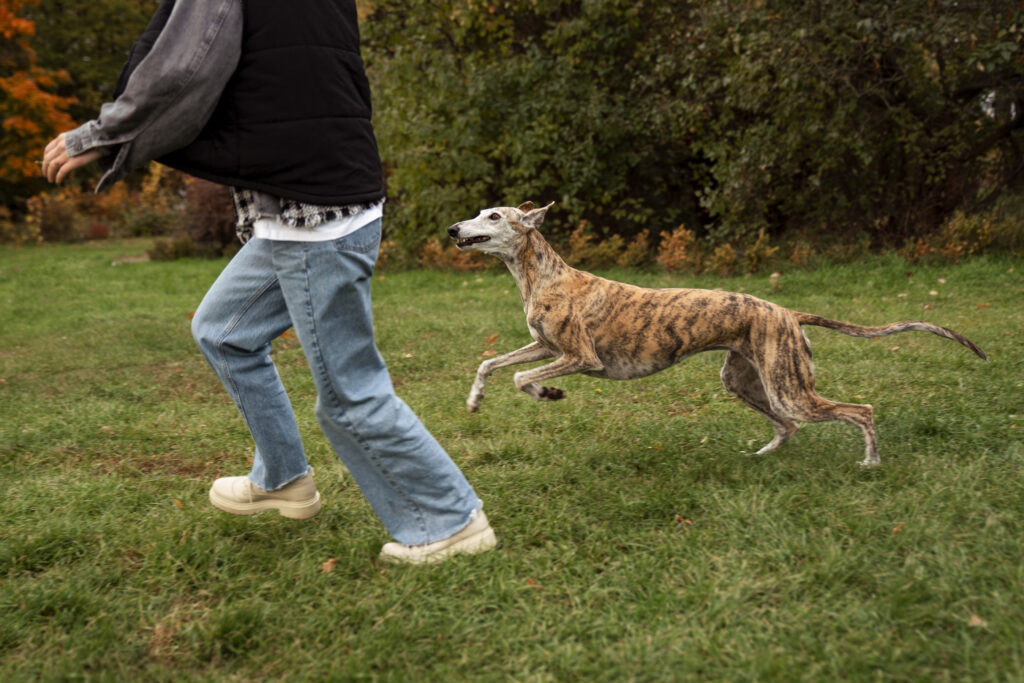
Your attention drifts toward the side window. Then something instantly captures your attention. A child is running. Behind him is a dog. The child appears terrified. His arms are flung into the air. His mouth is wide open. He is screaming. The dog is moving rapidly. Its body is low. Its movement appears aggressive.
The entire scene lasts only moments. Yet before conscious thought has time to organise the event, your lower cephalic systems have already begun constructing a behavioural reality.
The event appears obvious. A child is being chased. A child is in danger. A dog is attacking. A rescue may be required.
The emotional certainty feels immediate. But the certainty is not coming from conscious thalamic reflection. The certainty is being assembled elsewhere.
2. The Acute Construction of Behavioural Reality
The moment visual information strikes the retina, multiple cephalic systems begin operating simultaneously.
- The Mesencephalon tracks motion trajectories.
- The Metencephalon prepares bodily movement.
- The Myelencephalon elevates survival vigilance.
- The Diencephalon stamps intensity urgency onto the event on behalf of the three lower cephalons.
The lower systems are not interested in storytelling. They are interested in survival. They do not ask whether the dog is friendly. They do not ask whether the child is playing. They do not pause for symbolic interpretation. They evaluate probabilities.
The probability currently favours danger. Consequently, the Siencephalon begins receiving a coordinated stream of behavioural deposits.
- The Parahippocampal relay contributes spatial geometry.
- The Basal Ganglia Striatum contributes motor readiness.
- The Cingulate relay contributes physiological urgency.
- The Perirhinal relay contributes contextual identification.
The Entorhinal gateway begins packaging the event. A behavioural signal is assembled. The signal says:
Something is wrong. Action may be required.
3. The Trauma That Almost Became Permanent
Suppose the vehicle never stops. Suppose you continue driving. The child disappears from view. The event remains unresolved.
In that scenario, the Siencephalon must preserve an incomplete behavioural trace. The hippocampal archive receives an open-ended event. The child was running. The dog was chasing. The outcome remains unknown.
Later, the Diencephalon may repeatedly revisit this incomplete trace. The Telencephalic screen may project imagined outcomes from the Diencephalon.
- Perhaps the child was bitten.
- Perhaps the child was injured.
- Perhaps something terrible happened.
The thalamic memory begins accumulating hypothetical layers. An unresolved signal remains biologically unstable. The mind attempts to complete what reality never finished.
Over time, the event risks becoming a distorted memory built partly from actual perception and partly from symbolic reconstruction.
The original behavioural package remains incomplete. The archive remains open.
4. The Man With the Tyre Wrench
Now imagine a different outcome. The driver stops the car. The trunk opens. A tyre wrench is retrieved. Adrenaline surges. The assumption of danger remains intact.
You run toward the location where the child was last seen. The wrench feels heavier than normal. Breathing accelerates. Muscles tighten. Every lower cephalic system continues preparing for confrontation.
The behavioural package remains coherent. Rescue. Protection. Intervention. Danger. The signal remains stable because all available evidence supports it.
Then you round the corner. Everything changes.
5. The Reality That Rewrites the Signal
The child is sitting calmly on the ground. The dog is beside him. There is no attack. There is no danger. There is no emergency. The child is laughing. The dog is wagging its tail. Its mouth hangs open. Its breathing is heavy from play.
The supposed victim is happily stroking the dog’s forehead. The supposed predator is behaving like a companion.
Within seconds, an entirely different reality appears on the Telencephalic screen. The significance of this moment cannot be overstated. The Telencephalon is not creating new behavioural reality. It is revealing actual reality.
And that revelation forces every other cephalon to reconsider its previous calculations.
6. The Telencephalon as an Open Window
Under Psychextrics, the Telencephalon functions as a display interface rather than a behavioural constructor. Its role resembles an open window.
Through that window, the entire cephalic architecture gains access to a unified representation of reality. The lower cephalons immediately begin recalibrating.
- The Myelencephalon abandons its emergency posture. Heart rate begins falling. Respiration slows.
- The Metencephalon terminates combat-oriented motor preparation.
- The Mesencephalon abandons threat tracking. The body starts returning toward stability.
- The Diencephalon undergoes an equally dramatic transformation. The contextual meaning shifts. Predation becomes play. Threat becomes safety. Panic becomes relief.
The symbolic frame collapses and reforms around the newly displayed reality.
This transformation occurs because the Telencephalon has provided something the lower systems lacked. Verification through the ‘Feedback Loop of Consciousness‘.
7. The Siencephalon as the Behavioural Archivist
The most important changes occur within the Siencephalon itself.
The Entorhinal feedback relay begins receiving updated information from the Telencephalic display. The previously assembled behavioural package must now be revised.
- The original archive contained a probable threat.
- The updated archive contains a playful misunderstanding.
The hippocampus therefore appends a second layer onto the behavioural trace. The event is not erased.
- The panic remains recorded.
- The concern remains recorded.
- The decision to intervene remains recorded.
But the outcome becomes attached directly to the same indexed trace. The memory transforms from:
“A child was being attacked by a dog.”
To:
“I believed a child was being attacked by a dog, but discovered the child was playing.”
This distinction is crucial.
The Siencephalon does not simply store experiences. It stores trajectories. It stores the evolution of behavioural reality across time.
8. The Pallial Bifurcation
The importance of this example becomes clearer when viewed through the shared evolutionary ancestry of the hippocampus and cortex.
- Both originate from the mammalian pallium.
- Both utilise remarkably similar cellular architectures.
- Both employ pyramidal neurons.
- Both participate in highly organised information pathways.
Yet despite these similarities, their labour differs fundamentally.
The hippocampal architecture of the Siencephalon functions as an indexing civilisation. The cortical architecture of the Telencephalon functions as a display civilisation.
- One packages. The other projects.
- One records. The other reveals.
- One constructs behavioural continuity. The other displays behavioural continuity.
This division represents what Psychextrics identifies as the Pallial Bifurcation. Two structures emerging from a common ancestral foundation ultimately specialised into entirely different forms of labour.
9. The Screen and the Viewer
The relationship between these territories is therefore asymmetric. The Siencephalon continuously assembles behavioural reality. The Telencephalon continuously displays behavioural reality.
The display then feeds back into the assembler. The assembler updates the archive. The archive influences future predictions. The cycle repeats.
The boy and the dog become more than a memory. They become a recalibration event. Future encounters with similar situations will now incorporate this updated trace.
- The next running child.
- The next barking dog.
- The next apparent emergency.
All will be interpreted through a behavioural archive that contains both the initial fear and the eventual correction.
This is why recursive stabilisation exists. Without it, every misunderstanding would become permanent.
10. Why Consciousness Is Not the Architect
The story of the tyre wrench demonstrates something profound about the nature of conscious awareness.
- Consciousness did not create the initial panic.
- Consciousness did not assemble the behavioural signal.
- Consciousness did not organise the lower cephalic response.
Those operations occurred before reflective narration emerged.
The Telencephalon merely displayed what the cephalic architecture had already constructed. Its contribution came later. By revealing reality accurately, it allowed the rest of the system to correct itself.
The display became a validation mechanism. The screen informed the assembler. The viewer informed the archivist. The archive changed accordingly.
Conclusion: The Assembler and the Screen
The distinction between the Siencephalon and the Telencephalon is therefore not a minor anatomical clarification. It represents a fundamental separation of labour within Behavioural science.
The Siencephalon is the assembler of behavioural continuity.
- It integrates signals.
- It indexes memories.
- It tags emotional significance.
- It packages behavioural trajectories.
- It stabilises experience across time.
The Telencephalon is the display of behavioural continuity.
- It renders perception.
- It projects awareness.
- It generates symbolic narration.
- It provides the open sensory window through which behavioural reality becomes visible.
The story of the boy, the dog, and the tyre wrench reveals why both systems are necessary. Without the Siencephalon, there would be no continuity to display. Without the Telencephalon, there would be no reality against which continuity could be corrected.
One writes the behavioural record. The other reveals the world.
Together they create the living cycle through which experience becomes memory, memory becomes prediction, and prediction becomes behaviour.
Back to: 👇