
The Six-Cephalon Architecture: Restoring Vertical Behavioural Continuity
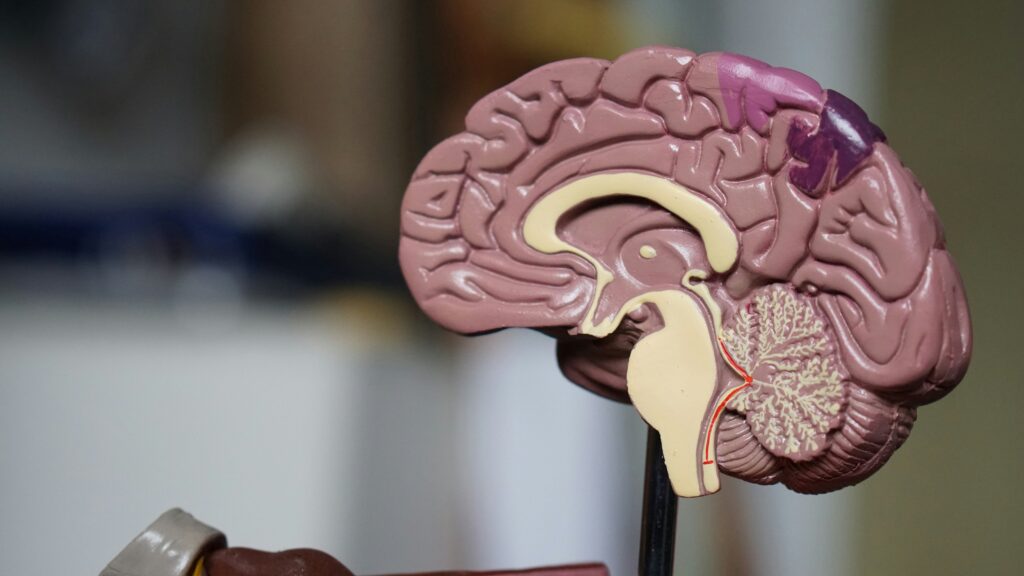
BY: OMOLAJA MAKINEE
One of the deepest problems in Behavioural science has never been a lack of data. It has been a lack of architecture.
For more than a century, Neuroscience, Psychology, Psychiatry, and Cognitive science accumulated enormous quantities of information regarding behaviour, emotion, memory, perception, movement, consciousness, and decision-making. Thousands of specialised structures were identified. Tens of thousands of behavioural studies were published. Entire disciplines emerged to study individual components of the human organism.
Yet something fundamental remained missing. The brain gradually became understood as a collection of parts rather than a coherent behavioural machine.
- Memory became separated from emotion.
- Emotion became separated from movement.
- Movement became separated from survival.
- Consciousness became separated from anatomy.
- Behaviour became separated from architecture.
As a result, Behavioural science inherited a fragmented picture of the human organism. The 6-Cephalon Model of Psychextrics emerges as an attempt to restore the missing continuity.
Rather than treating behaviour as a collection of isolated psychological events, we reconstructs behaviour as a vertically integrated cephalic civilisation.
In this framework, behaviour is not generated from a single location. It is assembled progressively through six distinct architectural tiers.
1. The Return of Vertical Behaviour
The six-cephalon model proposes that every behavioural event emerges through a specific hierarchy.
- The Myelencephalon provides Survival Vigilance.
- The Metencephalon provides Kinetic Stability.
- The Mesencephalon provides Spatial Orientation.
- The Diencephalon provides Meaning Weighting.
- The Siencephalon provides Signal Integration.
- The Telencephalon provides Behavioural Display.
This sequence is not merely anatomical. It is operational. Each cephalon contributes a distinct behavioural service to the final conscious experience.
- The organism first survives.
- Then stabilises movement.
- Then locates itself within space.
- Then determines significance.
- Then integrates competing streams.
- Finally, it becomes consciously aware of the result.
Behaviour therefore emerges through a vertical assembly line. Consciousness arrives last.
This simple adjustment restores a form of behavioural continuity that disappeared from modern science.
2. The Behavioural Sequence of the Living Organism
When examined through this architecture, every behavioural event follows a predictable progression.
- Survival stabilises first.
- Movement coordinates second.
- Orientation targets third.
- Meaning weights fourth.
- Signals integrate fifth.
- Conscious awareness displays sixth.
The order matters.
- Without survival there is no movement.
- Without movement there is no meaningful interaction with the environment.
- Without orientation there is no target upon which behaviour can act.
- Without meaning there is no behavioural priority.
- Without integration there is no coherent experience.
- Without display there is no conscious awareness of what has occurred.
The hierarchy therefore operates as a mechanical sequence rather than a philosophical abstraction. Each level depends upon the levels beneath it. The result is a complete behavioural chain extending from autonomic vigilance to conscious reflection.
3. Resolving the Great Anatomical Divide
The introduction of the Siencephalon represents the most important structural adjustment within the model. For generations, structures possessing fundamentally different operational identities were grouped together inside the traditional Telencephalon.
The hippocampus.
The amygdala.
The entorhinal system.
The olfactory-bulb.
The piriform cortex.
The basal ganglia.
These structures were placed within the same broad anatomical civilisation as the neocortex despite performing entirely different functions.
Some integrated information. Some indexed memory. Some tagged emotional value. Some relayed behavioural signals. Others displayed conscious awareness. The result was an architectural contradiction.
The compiler and the screen occupied the same territory. The storage machinery and the display machinery became fused together. The 6-Cephalon architecture resolves this contradiction by creating a clean separation between backend integration and frontend display.
4. The Revised Siencephalon
Within the revised model, the Siencephalon becomes the organism’s integration core. It houses the deep behavioural machinery responsible for transforming fragmented signals into unified behavioural reality.
- The hippocampal system indexes experience.
- The amygdalar system weights significance.
- The entorhinal system coordinates relay traffic.
- The olfactory-bulb processes chemical reality.
- The piriform cortex provides specialised allocortical display for olfaction.
Together these structures form a single integration civilisation. Their purpose is not conscious narration. Their purpose is behavioural compilation.
They receive streams from every cephalic level. They organise them. Bind them. Compress them. Stabilise them. Then prepare them for conscious display.
The Siencephalon becomes the great convergence zone of the brain.
5. The Revised Telencephalon
Once the Siencephalon is separated, the Telencephalon undergoes a remarkable simplification. It becomes purely a display system.
The revised Telencephalon consists exclusively of the six-layered neocortical mantle.
- Frontal cortex.
- Parietal cortex.
- Temporal cortex.
- Occipital cortex.
- Association cortex.
- Language cortex.
- Sensory display cortex.
Their common feature is not storage. It is rendering.
The Telencephalon becomes the behavioural theatre of the organism.
- It does not originate behavioural reality. It displays behavioural reality.
- It does not compile memory. It displays memory.
- It does not create emotional significance. It displays emotional significance.
- It does not generate behavioural meaning. It displays behavioural meaning.
The screen becomes separated from the machinery operating behind it.
6. The Unified Signal Matrix
This architectural realignment produces one of the most important consequences of the entire Psychextric framework.
Consciousness ceases to exist within a single structure. Instead, consciousness becomes distributed across multiple rendering systems. When an individual observes a burning wire, the visual properties of that object are rendered upon the six-layered visual display systems of the Telencephalon.
Shape appears.
Distance appears.
Movement appears.
Boundaries appear.
At the very same moment, chemical properties associated with smoke or burning insulation may be processed through the olfactory pathway.
These chemical realities are rendered through the allocortical architecture of the piriform system. The conscious organism therefore experiences a unified event. Yet the display originates from multiple specialised screens operating simultaneously.
The Siencephalon and Telencephalon function together as a unified signal matrix. One integrates. The other symbolises. One compiles. The other displays.
7. The Source Map of Conscious Content
Perhaps the most profound implication of the 6-Cephalon architecture is that no portion of the display cortex possesses native content. Every conscious experience displayed within the Telencephalon originates elsewhere.
- Visceral awareness emerges from survival systems associated with the Myelencephalon.
- Motor awareness emerges from kinetic systems associated with the Metencephalon.
- Spatial awareness emerges from orientational systems associated with the Mesencephalon.
- Value judgments emerge from the Diencephalon.
- Autobiographical continuity emerges from the Siencephalon.
The display cortex becomes an auditing theatre rather than a source generator. Its role is not to create behavioural reality. Its role is to make behavioural reality visible.
The screen illuminates the work of deeper cephalic systems.
8. Why the Architecture Matters
The importance of the six-cephalon model extends beyond anatomy. It changes how behaviour itself is understood.
The classical model encouraged the belief that consciousness sits at the top of the hierarchy as an executive ruler. The 6-Cephalon model proposes the opposite. Consciousness is the final recipient of behavioural reality.
- The lower cephalons generate.
- The Diencephalon evaluates.
- The Siencephalon integrates.
- The Telencephalon displays.
Behaviour therefore emerges from the entire civilisation rather than from a single cortical throne. This restores a level of mechanical clarity largely absent from modern Behavioural science.
The organism becomes understandable as a layered machine rather than an abstract psychological mystery.
Conclusion: A Brain Reconnected to Itself
The six-cephalon architecture represents an attempt to reconnect Behavioural science with structural continuity. By restoring the missing layers between survival, movement, orientation, meaning, integration, and awareness, the model rebuilds the vertical chain through which behaviour becomes conscious.
- The Myelencephalon stabilises existence.
- The Metencephalon stabilises movement.
- The Mesencephalon stabilises space.
- The Diencephalon stabilises meaning.
- The Siencephalon stabilises integration.
- The Telencephalon stabilises display.
Together they form a complete behavioural civilisation.
In this architecture, consciousness is no longer an isolated phenomenon floating above biology. It becomes the final visible expression of a deep cephalic hierarchy operating beneath it.
The result is a brain that regains its mechanical clarity, its architectural continuity, and its behavioural coherence—a unified organism whose conscious experience emerges not from a single ruler, but from the coordinated labour of six interconnected cephalic worlds.
Back to: 👇