
Blindsight and the Displaced Mind: A Psychextric Interpretation of Vision Without Seeing
BY: OMOLAJA MAKINEE
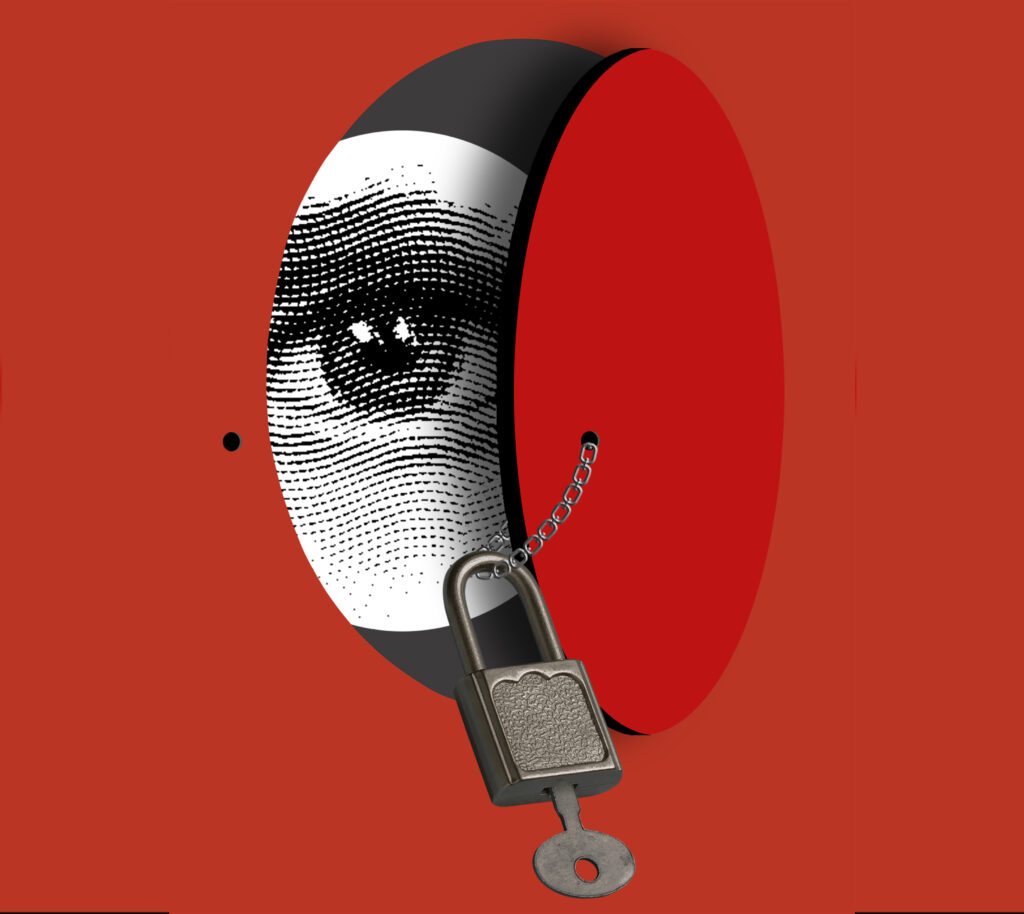
One of the most profound discoveries in modern neuroscience is the phenomenon of blindsight—a condition that appears, at first glance, to contradict everything we assume about vision, awareness, and consciousness.
Blindsight reveals a simple but unsettling truth:
You can see without knowing that you see.
Patients with blindsight report complete blindness in parts of their visual field. Yet, when prompted, they can:
- Point to objects they claim not to see,
- Detect movement with striking accuracy,
- Even distinguish shapes or emotional expressions—
all while insisting they are merely guessing.
This paradox has long been considered a cornerstone in the study of consciousness. But within the framework of Psychextrics, blindsight is not a paradox at all. It is evidence.
1. Vision Without Knowing: The Two Forms of Blindsight
Blindsight is typically divided into two observable forms:
Type I – Action Without Awareness
In this form, the individual has no conscious visual awareness whatsoever of visual stimuli. Yet, their behaviour tells a different story.
They can:
- Accurately point to a light source,
- Move their eyes (saccades) toward unseen objects,
- Navigate obstacles they claim not to perceive.
Type II – Feeling Without Seeing
In this form, the individual reports a vague sense of something occurring:
- A feeling of movement,
- A subtle awareness of change,
- A non-visual intuition that “something is there.”
2. The Classical Explanation—and Its Limits
Neuroscience explains blindsight through alternative visual pathways.
Under normal conditions:
- Visual data travels from the retina; to the thalamus; to the primary visual cortex (V1),
- Where it becomes consciously perceived.
In blindsight:
• The primary visual cortex is damaged or inactive,
• Yet secondary pathways remain intact, particularly:
◦ The superior colliculus of the mesencephalon,
◦ The pulvinar nucleus of the thalamus,
◦ And connections to the amygdala.
These pathways allow the brain to:
- Detect motion,
- Identify threats,
- Guide behaviour—
without engaging conscious awareness.
Functional imaging (fMRI) consistently shows that when stimuli are presented in the “blind” field:
- The cortex remains silent,
- But the mesencephalon, especially the superior colliculus, becomes active.
Diffusion Tensor Imaging (DTI) further confirms that these secondary neural pathways remain intact and active, even when the primary visual route is disrupted.
3. The Psychextric Shift: The Cortex Is Not the Mind
Where traditional neuroscience sees blindsight as an exception, Psychextrics sees it as confirmation of a deeper principle:
The cortex is not the mind. It is the display.
In this framework:
- The diencephalon and mesencephalon perform the real-time processing of perception,
- The cortex merely presents the final output to conscious awareness.
Blindsight, therefore, is not “vision without processing.” It is processing without display.
4. The Critical Observation: Behaviour Without Conscious Vision
The most compelling evidence for blindsight lies in behavioural experiments. When patients are asked to “guess”:
- The direction of movement,
- The location of a light,
- The presence of an object,
they perform with up to 90% accuracy. Yet they insist: “I am just guessing.”
This is the defining feature of blindsight:
The brain knows—but the person cannot see how the brain knows if the cortex cannot see.
Under the framework of Psychextrics, the cortex is not a prerequisite to perceive the world. Rather than being the seat of perception, the cortex acts as the display window for consciousness—the final stage of a process that begins subconsciously. We process visual stimuli long before they reach conscious awareness; the cortex merely provides conscious confirmation of what the brain already “knows.”
The phenomenon of blindsight, therefore, does not represent a loss of perception, but a deprivation of that conscious confirmation of visual awareness. This proves that the human brain does not strictly require the cortex to perceive or interact with the world.
5. The Psychextric Interpretation: Displacement, Not Loss
Psychextrics reframes this entirely.
The key principle is:
The loss of a structure does not erase function—it displaces its display.
In blindsight:
- Visual data is still captured (Aperture Sighting),
- Still mapped and processed (Orientation and subcortical pathways),
- Still emotionally evaluated (Resonant systems),
- Still processed through Reflective Sighting (GIM–EIM) and relay to the cortex,
but it never reaches:
- The visual cortex (V1) because of the damage.
- And therefore cannot be displayed within the cortical pathway responsible for visual awareness.
- Blindsight patient is deprived of visual confirmation of what is consciously known through alternative cortical pathways not biowired at the level of GIM for visual stimuli.
The system is functioning—but the display is offline.
6. The Role of the Superior Colliculus: The Hidden Navigator in Blindsight
The superior colliculus, located in the mesencephalon just beneath the thalamic pulvinar, becomes central in this process.
It is responsible for:
- Rapid detection of movement,
- Spatial orientation,
- Reflexive visual responses,
- Threat detection through connections with the amygdala.
This structure operates below conscious awareness, yet it is powerful enough to:
- Guide eye movements,
- Influence behaviour,
- And produce accurate responses to unseen stimuli.
Blindsight demonstrates that this system alone is sufficient to guide action.
7. Cerebellar Agenesis and Blindsight: A Shared Principle
Drawing from the psychextric principle observed in conditions such as cerebellar agenesis, a similar pattern emerges:
- The absence of a major structure does not eliminate function,
- Instead, the brain reorganises, reroutes, and redistributes processing.
In cerebellar agenesis:
- Coordination and motor functions persist despite missing anatomy.
In blindsight:
- Visual behaviour persists despite missing cortical display.
Both cases reveal the same underlying truth:
Biological systems are not dependent on single structures—they are distributed networks.
8. Genetic Mapping and the Problem of Arrival Without Destination
From a psychextric perspective, another layer of insight emerges.
Neural pathways are guided by Genetic Index Markers (GIM):
- They are pre-programmed and biowired to arrive at specific cortical destinations,
- Following inherited developmental blueprints.
But in blindsight:
- These pathways arrive at their intended cortical location—
- Only to encounter absence or dysfunction.
The result is not replacement, but displacement:
- Signals are rerouted through subcortical pathways,
- Display is altered, fragmented, or entirely absent,
- Conscious awareness is present, whilst visual awareness is bypassed.
Thus, the system does not fail. It reconfigures.
9. Three Conditions of Vision
Blindsight allows us to compare three fundamental states:
A. Normal Vision
- Active cortex.
- Active subcortical pathways.
- Conscious perception.
B. Complete Blindness (Ocular Damage)
- No retinal input.
- No cortical activity.
- No subcortical activation.
C. Blindsight
- No cortical display.
- Active subcortical processing.
- Behaviour guided without awareness.
The Functional Evidence: Brain Imaging (fMRI)
The most “evident” proof of blindsight comes from comparing what the brain sees and perceived versus what the person knows and can confirm through thalamic relay to visual cortex.
| CONDITION | VISUAL STIMULUS | CONSCIOUS AWARENESS | CORTEX V1 ACTIVITY (FMRI) | SUBCORTICAL ACTIVITY |
| Normal Vision | Present | “I am aware and I can see.” | Displayed | Active |
| Blindness (Eye damage) | Present | “I am not aware, and I cannot see.” | None | None |
| Blindsight (V1 damage) | Present | “I am aware but I cannot see.” | None | Active (Superior Colliculus) |
This comparison makes one thing clear:
Conscious vision is not required for functional vision.
10. The Implication: Consciousness Is a Display, Not a Process: Sleep, Subconscious Awareness, and the Continuity of Perception
Blindsight forces a redefinition of consciousness itself because it reveals a deeper principle:
Conscious awareness is not required for perception to occur—it is only desirable for perception to be consciously displayed.
This principle becomes even clearer when we examine the architecture of sleep. When the cortex sleeps, conscious awareness recedes, but perception does not cease. The organism remains subconsciously aware of its environment. This is why a sudden sound—a door closing, a voice calling, a shift in environmental tone—can awaken a sleeping individual almost instantly. The system is still receiving, still processing, still evaluating. What is absent is not perception, but conscious display of awareness.
Under psychextrical interpretation, sleep is not a shutdown of the brain. It is a reorganisation of perceptual authority.
In waking life, the telencephalon operates in full conscious coordination:
- The cortex displays perception as conscious experience,
- The basal ganglia regulate voluntary movement,
- The limbic system integrates memory and emotion into behaviour.
During sleep, however, this hierarchy shifts. The cortex withdraws from conscious display, entering a state of functional silence in awareness. The basal ganglia transition into involuntary motor regulation, allowing subtle bodily adjustments—turning in bed, repositioning limbs, even sleep-talking—without conscious intent. Yet, critically, the hippocampus does not disengage.
Instead, the hippocampus remains actively anchored to the diencephalon, continuing its role in memory consolidation and recall integration. This is why dreams are not random noise but structured experiences. They are echoic re-sightings—the reactivation of stored perceptual material, reorganised and replayed without cortical supervision.
Thus, even in sleep:
- The system continues to receive environmental input,
- The diencephalon continues to interpret and regulate,
- The hippocampus continues to retain and reconstruct.
Only the cortical display is absent. This leads to a critical realisation:
Out of the cephalic system, it is primarily the cortex and basal ganglia that relinquish conscious control during sleep, while the broader perceptual architecture—especially the diencephalon and its connected systems—remains continuously active. The brain does not stop. It simply stops showing its display to conscious awareness.
This brings us back to blindsight. In blindsight, the visual cortex—the designated display centre for visual perception—is damaged. Yet conscious perception persists through alternative pathways. The individual can consciously perceive visual stimuli without “seeing” them.
This demonstrates that:
- Conscious perception can exist without visual awareness,
- Decision can occur without conscious confirmation,
- Knowing can emerge without seeing.
The distinction is therefore precise:
- Blindness: No conscious perception, no conscious awareness—both input and processing are absent or damaged.
- Blindsight: Conscious perception without conscious visual display—processing occurs, but conscious visual awareness is bypassed.
In both sleep and blindsight, the same principle holds:
The brain:
- Sees,
- Processes,
- Decides,
before consciousness becomes aware of it—or even in its complete absence. What this ultimately reveals is that consciousness is not the driver of behaviour. It is the observer of a system already in motion.
Human behaviour, when understood through psychextrical architecture, is no longer mysterious. It is the visible outcome of a continuous, multi-layered process that never sleeps—even when we do.
Conclusion: The Mind Beyond Awareness
Blindsight is often described as a mystery. But within Psychextrics, it becomes a revelation. It shows that:
- Perception is layered,
- Consciousness is selective,
- And behaviour can emerge from stimuli that never reach either conscious awareness or visual awareness or both.
Most importantly, it reveals that:
The absence of conscious experience does not mean the absence of perception. It means only that the perception has not been displayed.
In the end, blindsight does not diminish our understanding of vision. It expands it. Because it reminds us that what we know we see is only a fraction of what our subconscious mind has already seen, processed, stored in memory, and formed the structure of our worldview.
Back to: 👇