
Aperture Sighting and the Hormonal Weight of Light: How What We See Shapes the Biology of Perception
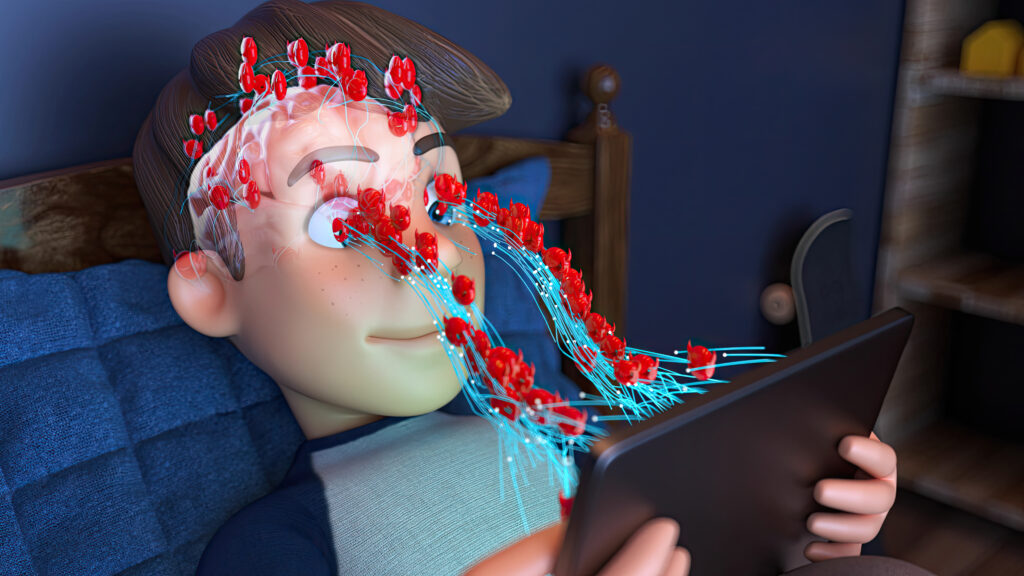
When light becomes influence: how screen-driven perception is reshaping biology beyond content—at the heart of rising scrutiny on platforms like TikTok and Facebook.
BY: OMOLAJA MAKINEE
Human beings often think of vision as a neutral sensory channel—a simple pathway through which images enter the brain and are interpreted as objects, words, or scenes. Yet the psychextric architecture of perception reveals something far deeper. Vision is not merely about seeing the world; it is also about how the body emotionally and biologically responds to what is seen.
At the centre of this process lies Aperture Sighting, the perceptual spectrum responsible for regulating the environmental exposure of light entering the eye. While its anatomical expression appears simple—the iris adjusting the pupil and regulating light intake—its functional role reaches far beyond optics. Aperture Sighting sits at the threshold between environmental light and the diencephalic emotional systems that govern hormonal activity within the body.
Light does not merely illuminate the world. It carries emotional and biochemical weight once it enters the perceptual system.
1. The Emotional Gate of Light
In the psychextric model, Aperture Sighting determines two essential aspects of visual perception.
- First, it regulates what enters the visual field—the visual breath of perception.
- Second, it regulates the emotional weight of that incoming light—how strongly the organism responds to the visual stimulus.
This second function is often overlooked in conventional discussions of vision. The eye does not simply capture images. Through its interaction with the hypothalamus and limbic system within the diencephalon, the visual aperture also influences hormonal signalling within the body.
Light entering the eye can therefore trigger physiological responses that extend far beyond vision itself. Hormones are released, neural activity shifts, and the biological rhythms of the body adjust in response to the visual environment.
What we see, therefore, is never purely visual. It is biochemical.
2. The Organic Rhythm of the Brain
Contrary to common assumptions, the brain does not fundamentally care whether it is day or night. The brain operates through an organic sleep–wake rhythm, a biological cycle that regulates the energy bandwidth of the cortex.
During waking activity, cortical energy gradually depletes as the brain performs cognitive work. When this energetic bandwidth becomes sufficiently reduced, the organism naturally transitions into sleep, allowing the nervous system to restore equilibrium.
Sleep, therefore, is not merely a response to darkness. It is a physiological consequence of energy depletion within the cortical system.
Under natural environmental conditions, the circadian rhythm supports this process by aligning human activity with the cycle of sunlight. Daylight provides stimulation and alertness, while darkness gradually allows the body’s hormonal systems to prepare for rest.
For most of human history, this rhythm remained relatively stable because the visual environment followed a predictable pattern governed by the sun.
3. Reading Before the Digital Age
In earlier generations, intellectual work relied primarily on books, paper, and physical writing tools. When individuals read or studied late into the evening, the visual stimuli entering the eye came from reflected light rather than light generated directly by the reading surface itself.
A printed page does not emit light. It simply reflects ambient illumination from the surrounding environment. As a result, the visual stimulus entering the eye remains relatively stable and biologically modest.
Because of this, reading from paper rarely produced strong stimulation of the hypothalamic networks responsible for hormonal activation. The aperture admitted light sufficient for vision, but not in a way that dramatically altered the biological rhythm of the body.
The circadian cycle therefore remained largely undisturbed. As cortical energy gradually depleted, the brain naturally transitioned toward sleep. The act of reading itself did not interfere with the body’s internal rhythm.
4. The Digital Shift in Visual Exposure
The arrival of computer screens, televisions, tablets, and smartphones introduced a profound change in the human visual environment.
Unlike paper, these devices emit light directly toward the eye. The visual stimulus is no longer merely a reflection of ambient illumination; it becomes an active source of light energy that feeds directly into the perceptual system. This shift transforms the visual encounter into something far more powerful.
The light rays from digital screens pass through the aperture of the eye and stimulate retinal pathways that communicate with the hypothalamus. Instead of receiving a passive visual signal, the diencephalon receives a strong luminance stimulus capable of activating hormonal responses.
In this sense, the light emitted from screens behaves almost like a second artificial sun within the perceptual field.
5. Artificial Light and Hormonal Activation
The hypothalamus plays a central role in regulating the body’s hormonal balance and biological rhythms. When strong luminance signals reach this region through the visual system, they can trigger biochemical responses that influence alertness, mood, and wakefulness.
This phenomenon can be understood through analogy.
Sunlight striking the skin stimulates the production of vitamin D within the body. In a similar manner, intense light entering the visual aperture stimulates biochemical processes within the hypothalamic network. The result is an increase in cortical activation.
Instead of allowing the brain’s natural energy depletion to guide the organism toward rest, the light stimulus effectively adds energetic input into the perceptual system. The cortex receives renewed stimulation and continues operating beyond the point at which the organic rhythm would normally initiate sleep.
In other words, the visual stimulus artificially extends the brain’s waking bandwidth.
6. The Disruption of Circadian Equilibrium
When digital devices are used late at night—particularly during activities such as reading, watching television, or scrolling through mobile phones—the emitted light repeatedly feeds this artificial stimulation into the hypothalamic network.
The result is not that the brain mistakes night for day. Rather, the brain receives continuous energetic reinforcement that delays the natural depletion of cortical activity. The circadian rhythm therefore becomes biochemically disrupted.
Instead of gradually winding down as the day progresses, the brain remains stimulated by the visual environment. Hormonal signals that normally support sleep preparation become delayed or suppressed.
Over time, this pattern can lead to chronic sleep disruption, cognitive fatigue, and broader physiological stress within the nervous system.
7. The Universal Emotional Weight of Light
One of the most striking aspects of this phenomenon is its universality. Regardless of culture, language, or personal experience, human beings share a common biological architecture. The hypothalamic regulation of circadian rhythm operates across the entire species.
As a result, the emotional and biochemical effects of intense artificial light are not purely psychological. They arise from fundamental biological mechanisms embedded within human physiology.
When the aperture admits certain types of visual stimuli—particularly strong luminance signals from digital screens—the body responds in predictable hormonal ways. What we see therefore influences what we become physiologically.
8. The Evolutionary Drift of Light: From Environmental Exposure to Biological Selection
If the emotional weight of light is universal, then its long-term consequences cannot remain confined to momentary hormonal responses. Over extended periods of time, repeated exposure to specific luminance environments begins to exert a quieter, more profound influence—one that operates at the level of biological adaptation and, ultimately, selection.
Throughout evolutionary history, light has always been one of the most powerful environmental regulators of life. The transition from darkness to daylight, the seasonal variation of sunlight, and the spectral composition of natural environments have shaped not only behaviour, but physiology itself. Species adapted:
- Nocturnal organisms evolved heightened sensitivity to low light,
- Diurnal organisms developed precision and colour-rich vision,
- Human circadian rhythms synchronised with the rising and setting of the sun.
In each case, the aperture of the eye did more than admit light—it admitted evolutionary pressure. What Psychextrics extends is this principle into the modern era.
For the first time in human history, the dominant source of luminance is no longer the sun, but the screen. Artificial light—particularly blue-spectrum, high-intensity, and temporally irregular—has become a constant presence within the perceptual field. Unlike natural light, it does not follow ecological rhythm. It intrudes into night, compresses time, and sustains wakefulness beyond biological design.
At the level of the hypothalamus, this produces continuous modulation:
- Circadian rhythms become delayed or fragmented,
- Hormonal cycles (melatonin, cortisol, dopamine) are reshaped,
- Sleep–wake architecture becomes increasingly artificial.
In the short term, these are functional adaptations. In the long term, they become selective pressures.
The implication is subtle but significant: if environmental light shapes hormonal regulation, and hormonal regulation influences reproductive biology, then over generations, patterns of light exposure may begin to participate in embryonic selection.
This does not suggest an immediate or visible transformation, but rather a gradual drift:
- Individuals whose physiology better tolerates prolonged artificial luminance may exhibit adaptive advantages in modern environments,
- Variations in circadian resilience, retinal sensitivity, and hormonal stability may become differentially expressed across generations,
- The developmental environment of the embryo—already sensitive to maternal hormonal states—may begin to reflect these altered light–hormone dynamics.
In this sense, the screen is no longer just a tool. It becomes part of the evolutionary environment of the modern world.
Where once the aperture admitted sunlight as the primary regulator of biological rhythm, it now admits a synthetic continuum of luminance that the organism must interpret, regulate, and survive. Over time, what begins as behavioural adaptation may sediment into biological predisposition.
Psychextrically, this reframes a simple truth:
What we see does not only shape how we feel—it participates in shaping what we become.
And since this trajectory will continue, the future human organism will not simply use artificial light—it will be partially defined by its capacity to endure and integrate it. The aperture, once a passive gate of light, becomes an active participant in the evolutionary dialogue between environment and biology.
9. Why Aperture Sighting Matters
Aperture Sighting reminds us that perception is not merely about recognising objects in the environment. It is about regulating the biological relationship between the organism and the visual world.
The aperture determines which visual signals enter the perceptual chain, but it also determines how strongly those signals influence the emotional and hormonal systems of the body. This means that perception is never neutral. Every visual encounter carries a potential emotional and biochemical consequence.
What follows from this is often overlooked: Environmental conditions do not merely influence behaviour in the moment—they continuously participate in the selection of biology itself, both in those already alive and in those yet to be born.
At the level of the individual, repeated exposure to particular visual environments—intense screen luminance, urban light saturation, artificial night cycles—places sustained demands on the hypothalamic–hormonal system. The body is required to adapt:
- to remain alert when it should be resting,
- to regulate mood under unnatural light cycles,
- to stabilise attention within overstimulated visual fields.
For some, this adaptation occurs with relative stability. Their hormonal fluidity (HFI) aligns sufficiently with their inherited range (HIM), allowing them to function within these altered environments. For others, the same conditions produce strain:
- dysregulated sleep patterns,
- heightened anxiety or emotional volatility,
- attentional fragmentation or cognitive fatigue.
Within conventional frameworks, these outcomes are often categorised under “mental health conditions.” Within Psychextrics, they are also understood as mismatches between environmental luminance demands and the individual’s inherited spectral capacity to regulate them.
This distinction is critical. It reframes certain behavioural and emotional disturbances not solely as internal dysfunctions, but as biological responses to environments that exceed or conflict with an individual’s perceptual–hormonal tolerance range.
At the population level, the implication deepens further. Environmental light conditions—now dominated by artificial sources—do not affect all individuals equally. Over time, those whose biology can stabilise under these conditions are more likely to:
- maintain functional rhythms,
- sustain cognitive and emotional regulation,
- reproduce within these environments.
Conversely, those whose systems remain persistently dysregulated may experience reduced stability across multiple domains of life.
In this way, Aperture Sighting becomes an unseen participant in natural selection:
- selecting, through environmental exposure, which biological configurations are reinforced,
- and which encounter increasing friction within the modern world.
This selection is not abrupt. It is gradual, cumulative, and often invisible within a single lifetime. Yet across generations, it contributes to a shifting biological landscape—one in which the capacity to process and regulate modern visual environments becomes increasingly significant.
Thus, Aperture Sighting is not merely the gate through which light enters. It is the point at which environment meets biology, where perception becomes physiology, and where the conditions of the world begin to shape the conditions of the human organism itself.
To understand behaviour, therefore, is not only to examine thought or emotion—but to recognise the silent, continuous influence of what is seen, how it is admitted, and how the body is required to live with it.
10. The Emotional Ecology of Vision
In the modern world, the human visual environment has changed dramatically. Artificial lighting, digital displays, and continuous screen exposure have introduced new forms of visual stimulation that the human biological system did not evolve to handle continuously.
Within the psychextric framework, these changes represent an alteration of the emotional ecology of perception. The visual aperture now encounters light sources capable of stimulating hormonal responses at times when the biological rhythm expects rest. The consequence is a gradual destabilisation of the natural equilibrium between perception and physiology.
In recent years, this destabilisation has taken on a tragic and highly visible form. There have been deeply distressing cases in which children and adolescents, following prolonged interaction with social media environments, have taken their own lives. Platforms such as Facebook and TikTok have faced legal challenges from grieving families who attribute responsibility to the content their children consumed.
At the level of surface interpretation, this appears to be a problem of content:
- harmful narratives,
- peer comparison,
- exposure to distressing or suggestive material.
Yet within the psychextric framework, this explanation—while not irrelevant—is incomplete. What is often overlooked is that content does not act in isolation. It is always delivered through a luminance medium—the screen—and it is the combined effect of what is seen and how it is biologically processed through light that shapes outcome.
The screen is not a neutral carrier. Through Luminance Sighting, it introduces:
- sustained artificial brightness,
- compressed visual rhythms,
- intensified contrast and motion cycles,
all of which continuously modulate the hypothalamic system.
This modulation alters hormonal states—affecting mood regulation, stress response, sleep cycles, and emotional stability. By the time Reflective Sighting begins its work of interpretation, it is no longer operating from a neutral baseline. It is already biochemically primed.
In this altered state:
- Reflective Sighting may interpret content with heightened negativity or absolutism,
- Resonant Sighting may amplify emotional weight beyond proportional context,
- Echoic Sighting may begin encoding emotionally dominant narratives with increasing intensity.
Over repeated cycles, a deeper shift may occur within the organism.
Resonant Sighting, operating at the level of HIM–HFI interaction, is not only responsible for emotional alignment—it is also tied to the organism’s continuity drive. When the internal environment becomes persistently misaligned—when emotional resonance repeatedly signals distress, instability, or lack of coherence—there may emerge a biological withdrawal from continuation.
In psychextric terms, this can be understood as a form of deselection:
- not a conscious decision in the reflective sense,
- but a gradual disengagement of the organism’s alignment with sustaining its own existence.
This is not universal. Not every child exposed to the same content or luminance environment responds in this way. This is because individuals differ in their inherited spectral variations:
- some possess higher resilience in HFI modulation,
- others maintain stronger reflective buffering against resonant amplification,
- while some carry vulnerabilities where emotional resonance can override stabilising systems.
The tragedy, therefore, does not arise from a single source. It emerges at the intersection of:
- environmental luminance (the screen),
- informational content (the narrative),
- and biological constitution (the individual’s spectral architecture).
To attribute causation solely to social media platforms is to isolate one component of a much larger system. Psychextrics instead frames this as an ecological imbalance—an environment in which the visual–emotional load exceeds the regulatory capacity of certain biological configurations.
In this sense, the modern visual world is not uniformly compatible with all human organisms.
- Some adapt.
- Some endure.
- And some, tragically, encounter a level of internal misalignment that leads to withdrawal from the very processes that sustain life.
This is the deeper implication of the emotional ecology of vision:
- Aperture admits the world,
- Luminance reshapes the body,
- Reflection interprets the experience,
- Resonance decides its weight—
and, in rare but devastating cases, whether continuation itself remains aligned.
Understanding this expands the frame—from blame to biology, from content to condition, and from isolated events to the broader architecture through which perception becomes life.
Conclusion: What We See Shapes Who We Become
The deeper lesson of Aperture Sighting is that perception carries profound biological significance. The images we encounter, the light that enters our eyes, and the visual environments we inhabit all participate in shaping the hormonal landscape of the body.
Vision is therefore not simply a window to the world. It is also a regulatory interface between the environment and human biology. What we see matters. But even more importantly, what our aperture allows us to see—and how intensely it allows that light to enter the perceptual system—matters even more.
Because every ray of light that passes through the visual gateway carries with it the potential to shape not only perception, but also the rhythms of the human body itself.
If Aperture Sighting imparts anything of enduring significance, it is this:
Human evolution has never been universal—it has always been selective.
Across history, different environments have demanded different biological tolerances. The transition from primitive communities to structured ancient civilisations did not preserve every biological composition. Some individuals adapted to organised density, hierarchy, slavery, and sustained social exposure. Others did not.
As human societies entered the industrial era, a new environmental force emerged—machinery, pollution, and toxic atmospheric conditions. Again, biology was tested:
- some bodies adapted to industrial labour and environmental toxins,
- others deteriorated under prolonged exposure,
- and many lives were shortened not by failure of will, but by incompatibility with the new environmental demands.
What Psychextrics reveals is that we are now undergoing a similar transition—only this time, the environment is not primarily physical, but perceptual. The modern world is defined by:
- continuous screen exposure,
- artificial luminance cycles,
- accelerated informational density,
- and the integration of digital and artificial intelligence systems into everyday life.
This is not merely a technological shift. It is a biological event.
Just as the industrial age required lungs that could endure polluted air, the digital age requires nervous systems that can regulate:
- constant visual stimulation,
- fragmented attention cycles,
- and sustained interaction with artificial perceptual environments.
Not every existing biological composition is equally suited to this world. Some individuals demonstrate:
- high tolerance to screen-mediated environments,
- stable circadian regulation despite artificial light,
- and adaptive cognitive–emotional responses to rapid informational flow.
Others experience:
- chronic dysregulation,
- perceptual fatigue,
- emotional volatility,
- or disengagement from the very systems that define modern life.
This is not accidental. It is the continuation of a fundamental principle:
Every new environment selects for the biology that can survive within it.
The future—particularly one shaped by advanced technology and artificial intelligence—will not simply be inhabited by the biology of the present. It will, over time, reflect those biological configurations capable of:
- integrating artificial luminance without destabilisation,
- sustaining coherence within high-density informational ecosystems,
- and maintaining alignment between perception, emotion, and identity under unprecedented conditions.
This does not imply superiority or inferiority. It reflects compatibility of natural selection.
Life, in its most unfiltered form, is not obligated to preserve every variation it produces. It moves through cycles of emergence, adaptation, and, where necessary, quiet disappearance. Some biological patterns persist because they align with the environment. Others fade because the environment no longer sustains them.
Aperture Sighting stands at the very beginning of this process. It is where the world first enters the organism. It is where environmental conditions begin their dialogue with biology. And, over time, it becomes one of the silent forces through which evolution continues its work.
This is life.
Back to: 👇