
Colonial Bureaucracy and the Dismantling of Africa’s Commicratic Order — and Why Ethnopublicanism Restores It
BY: OMOLAJA MAKINEE
The colonial encounter did not merely redraw African borders or extract material wealth; it systematically targeted Africa’s indigenous systems of governance. Central to this disruption was the deliberate dismantling of Africa’s commicratic modes of organisation—systems built on interdependent leadership between monarchs, chiefs, and citizenry assemblies. These systems were not primitive improvisations, but highly evolved ethnocratic–populist frameworks that balanced judicial authority, executive administration, and communal participation through consensus and moral legitimacy.
1. Republican Dismantling of Tribal Monarchy
During the colonial era, Western bureaucratic systems were imposed precisely to weaken this indigenous equilibrium. Judicial authority that once resided in monarchs—figures whose legitimacy derived from ancestry, spirituality, and communal trust—was subordinated to colonial magisterial courts presided over by European officials. Justice was no longer an extension of communal morality and ancestral continuity; it became an alien administrative function exercised in the name of distant imperial power.
This transformation was executed largely through indirect rule. Colonial authorities governed through traditional leaders while simultaneously hollowing out their authority. Chiefs and monarchs were retained as symbolic intermediaries, but their autonomous decision-making power was stripped away. Interdependent leadership—where monarchs exercised judicial oversight, chiefs executed communal administration, and citizenry assemblies shaped norms—was replaced with a vertical State apparatus accountable only to colonial administrators. Authority shifted from communal legitimacy to institutional coercion.
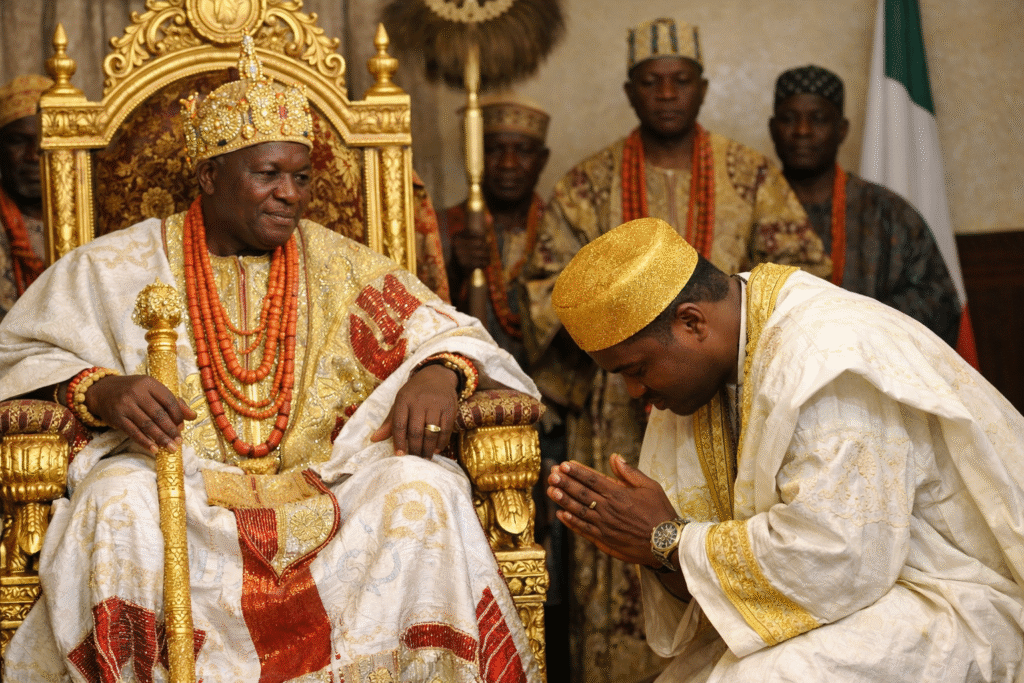
Yet, despite the formal dominance of Western bureaucratic governance, African societies have never fully internalised the idea of leadership detached from the governed. Republican governments, backed by military and police force, succeeded in enforcing compliance—but not in erasing memory, legitimacy, or expectation. Across the continent, monarchs and chieftaincy institutions remain deeply respected, not as relics, but as living moral authorities. Chiefs continue to resolve disputes, allocate land, preserve customs, and provide spiritual guidance within their tribal jurisdictions—often more effectively than State institutions.
This reality explains why post-colonial republican governments have consistently relied on traditional leaders to maintain social order at local and regional level. To prevent unrest and secure compliance, States have routinely co-opted chiefs and monarchs, employing and remunerating them through government agencies. This pragmatic alliance is revealing: republican governance structures have proven incapable of functioning independently of the ethnocratic–populist authority embedded within indigenous communities. Far from being obsolete, traditional governance remains the social infrastructure upon which State legitimacy quietly rests.
Nowhere is this interdependence clearer than in land governance. Across Africa, monarchs and chiefs continue to adjudicate land disputes, oversee land allocation, and regulate access to communal resources—often beyond the effective reach of State courts. Spiritual authority, too, remains firmly rooted in traditional institutions, operating in parallel with or outside formal administrative systems. In practice, the republican State governs with traditional authority, even when it refuses to acknowledge it openly.
2. Ethnopublic Restoration of Tribal Monarchy
Ethnopublicanism responds to this historical contradiction by restoring authority where it never truly disappeared. It does not invent new rulers; it re-legitimises existing ones. Most tribal communities across Africa have retained their monarchs to this day. Under ethnopublican governance, these monarchs resume their rightful judicial function, while chiefs continue to perform executive roles under them, and the citizenry is constitutionally restored as the legislative subject of governance.
Justice, in this framework, is administered through palaver-court systems, constitutionally anchored yet culturally grounded. Local citizenry are restored under the custodianship of their monarchs, not as subjects of arbitrary rule, but as participants in moral adjudication. These local and regional palaver courts are not informal tribunals; they are recognised judicial institutions named after their respective monarchs, whose hereditary legitimacy remains governed by customary law.
Crucially, ethnopublic justice is not rigid or monolithic. It operates as a pluralistic but harmonised system. While aligned with a national ethnopublic constitutional framework, each region retains moral sovereignty in how justice is practised. Professional judges and lawyers preside over palaver courts, and justice is administered in the name of the monarch at regional-level, in the name of the StateLord at State-level, and in the name of the House-of-StateLords at national-level, ensuring procedural consistency and constitutional compliance. Yet, the monarch remains the custodian of customary norms within their region, setting legal practices compatible with national law.
This allows tribal communities to prioritise dispute resolution methods that reflect their cultural logic. Some monarch may emphasise mediation and dialogue; others may require ritual reconciliation, restitution, or public apology. These differences are not legal inconsistencies—they are expressions of legitimate moral plurality. Ethnopublicanism recognises that justice derives its authority not from uniformity, but from intelligibility and acceptance by the governed.
Importantly, ethnopublic justice may coexist with other recognised legal traditions, including customary or tribal law systems. Communities retain the right to resolve internally generated social issues through culturally grounded processes, so long as they remain within citizenry-prescribed national laws. This decentralised flexibility is not a weakness of populocracy; it is its defining strength. It prevents alienation, reduces conflict, and embeds justice within lived social reality.
Through ethnopublicanism, legitimacy and custodianship are fully restored to Africa’s traditional rulers—not as autocrats, but as moral stewards within a modern constitutional order. Governance is not rolled back into the past; it is re-anchored in it and projected forward into the 21st century. Nothing is discarded. Nothing is erased. Ancient ethno-governed systems are not replaced—they are completed.
In this sense, ethnopublicanism does not merely reform African governance; it heals it. It reunites authority, justice, and community into a coherent whole—restoring Africa’s commicratic inheritance while equipping it for modernity, sovereignty, and collective dignity.
3. The Interdependent Authority of StateLord-Governors and Tribal Monarchs
Within the ethnopublican framework, the relationship between regional StateLord-Governors and tribal monarchs is neither competitive nor hierarchical, but deliberately interdependent. Each occupies a clearly defined sphere of authority, designed to prevent both administrative overreach and cultural erosion. This dual custodianship ensures that justice remains simultaneously constitutional and culturally intelligible.
StateLord-Governors function as regional judicial-administrative supervisors acting in the name of their respective StateLord. Their responsibilities include the formal establishment of palaver courts, the staffing and appointment of professional judges, legal clerks, and procedural officers, and the regulation of judicial conduct to ensure conformity with the ethnopublic constitution and citizenry-prescribed national laws. In this capacity, StateLord-Governors guarantee procedural consistency, legal competence, and constitutional integrity across regions without interfering in the cultural substance of justice.
Tribal monarchs, by contrast, exercise custodianship over the substantive moral law governing palaver courts within their recognised tribal jurisdictions. Their authority does not extend to procedural administration or judicial staffing; rather, it resides in defining the customary principles, reconciliatory norms, and ethical frameworks through which justice is interpreted and applied locally. These customary laws are not autonomous from the State—they must remain compatible with the national ethnopublic constitution—but they are authored and preserved by the monarch as ancestral custodian of the community’s moral order.
This division of responsibility establishes a system of mutual dependence. Palaver courts cannot function without StateLord-Governors to staff, regulate, and constitutionally anchor them; nor can they retain legitimacy without tribal monarchs to ground justice in tradition, spirituality, and communal ethics. Neither office supersedes the other. Instead, governance emerges through cooperation: StateLord-Governors protect the legal structure of justice, while monarchs safeguard its cultural soul.
In practice, this interdependence prevents both bureaucratic detachment and traditional absolutism. Monarchs cannot arbitrarily impose customary rulings without constitutional alignment, and StateLord-Governors cannot impose abstract legalism detached from lived cultural reality. Justice is thus neither a colonial relic nor a romanticised tradition, but a living synthesis of ancestral authority and modern constitutional governance.
Through this arrangement, ethnopublicanism resolves a historical tension that colonial rule deliberately fractured: the false opposition between State authority and traditional legitimacy. By restoring each to its rightful domain and binding them together through clearly defined roles, ethnopublic governance ensures that law is administered with competence, legitimacy, and moral continuity—affirming that sovereignty, in Africa, has always been collective, custodial, and shared.
4. Conclusion
At the philosophical core of ethnopublic governance lies a reversal of the modern State’s presumption of authority. Governance is not conceived as a power exercised over the people, but as an order continuously generated by the people themselves. The citizenry-electorate is therefore the true law-making body of society, not symbolically but substantively. Law emerges from lived social consensus, economic necessity, and moral continuity, while judicial StateLords exist only as supervisory custodians of constitutional coherence. Their role is deliberately non-directive: they do not shepherd society, engineer values, or steer culture. They merely ensure that collective actions remain compatible with the agreed constitutional framework. This separation prevents the Judicial-arm from mutating into a moral or political elite detached from the people.
Within this architecture, tribal monarchs occupy a philosophically indispensable position that neither republican courts nor technocratic advisory bodies can fulfill. Monarchs are not governors in the executive sense; they are custodial shepherds of ancestral memory, customary law, and moral continuity.
Where Advisory-Bodies are necessarily shaped by professional training, global standards, and international epistemologies, monarchs embody an unbroken ethical lineage rooted in the people’s historical self-understanding. Their presence acts as a civilisational brake against cultural drift—restraining the excesses of expert rationalism that, while efficient, may unconsciously import foreign value systems that erode African moral distinctiveness.
This custodial role does not oppose modernity; it stabilises it. By anchoring lawmaking to ancestral norms, monarchs ensure that when citizens legislate or consent to policy, they do so with full cultural self-recognition—remembering who they are, where they come from, and what moral boundaries define their collective existence.
In this way, ethnopublic governance achieves equilibrium: citizens create law, Advisory-Bodies refine possibility, judicial StateLords supervise constitutional alignment, and monarchs safeguard moral identity. Justice, therefore, flows upward through symbolic continuity—administered in the name of the monarch at the regional-level, the StateLord at the State-level, and the House of StateLords nationally—without ever severing law from its deepest source: the people’s ancestral consciousness.
Back to: 👇