
Ethnopublic Formation and the Populocratic Principle: Why Shared Governance, Not Shared Blood, Sustains Civilisation
BY: OMOLAJA MAKINEE
All human societies begin with ethnicity. This is not a cultural preference but an anthropological reality. Ethnicity emerges wherever humans settle, reproduce, and transmit memory across generations. Language, ritual, kinship, land attachment, and shared moral codes arise naturally from prolonged cohabitation. In this sense, ethnicity is neither a monarchical nor a political invention; it is a biological–social phenomenon. Every civilisation, without exception, originates in ethnic organisation.
Yet history demonstrates with equal clarity that ethnicity alone cannot sustain large-scale civilisation. The moment societies expand beyond a single lineage or clan, a choice presents itself: either ethnicity becomes the basis of domination, or it becomes the basis of cooperation. It is within this divergence that the distinction between ethnocracy and ethnopublic emerges.
1. Ethnocracy: When Ethnicity Becomes a Class Instrument
In much of Western political theory—and in many historical State formations globally—ethnicity is appropriated into ethnocracy. Ethnocracy occurs when one ethnic group institutionalises its dominance over others through political, economic, or legal privilege. Governance becomes class-based, even when clothed in democratic language. Citizenship may be universal in name, but power is unevenly distributed along ethnic lines.
Ethnocracy produces predictable outcomes: structural inequality, cultural alienation, resistance, and eventual instability. Where ethnicity is converted into hierarchy, the State becomes an arena of ethnic competition rather than collective administration. The ruling ethnic bloc must then suppress dissent, enforce loyalty, and continuously justify its dominance through ideology, nationalism, or coercion.
This pattern is observable across colonial systems, post-colonial republics, and even modern liberal democracies where “neutral” institutions disproportionately reflect the values and interests of a dominant ethnic or cultural class. In such systems, ethnicity becomes weaponised rather than harmonised.
2. Ancient Africa’s Divergence: From Ethnocracy to Ethno-Populism
What distinguishes ancient African civilisation—particularly Pharaonic Kemet—from many later political developments is not the absence of ethnicity, but its transformation. Rather than freezing ethnic identity into rigid class dominance, ancient African governance advanced toward ethno-populism: a system in which multiple ethnic groups retained their identities while participating in shared socio-economic governance.
Kemet did not erase ethnicity; it integrated it. The Pharaonic system functioned as a fountainhead for what later scholars would label African-socialism—not as an ideology imported from Europe, but as a lived governance practice grounded in reciprocity, communal obligation, and moral equilibrium (Ma’at). Authority flowed through collective responsibility, not ethnic supremacy.
This transition—from ethnocracy to ethno-populism—was the civilisational breakthrough that allowed Africa to sustain complex societies without collapsing into perpetual ethnic warfare. It demonstrated a fundamental principle: ethnic plurality does not require ethnic hierarchy.
3. The Ethnopublic: A Union of Ethnicities, Not Their Erasure
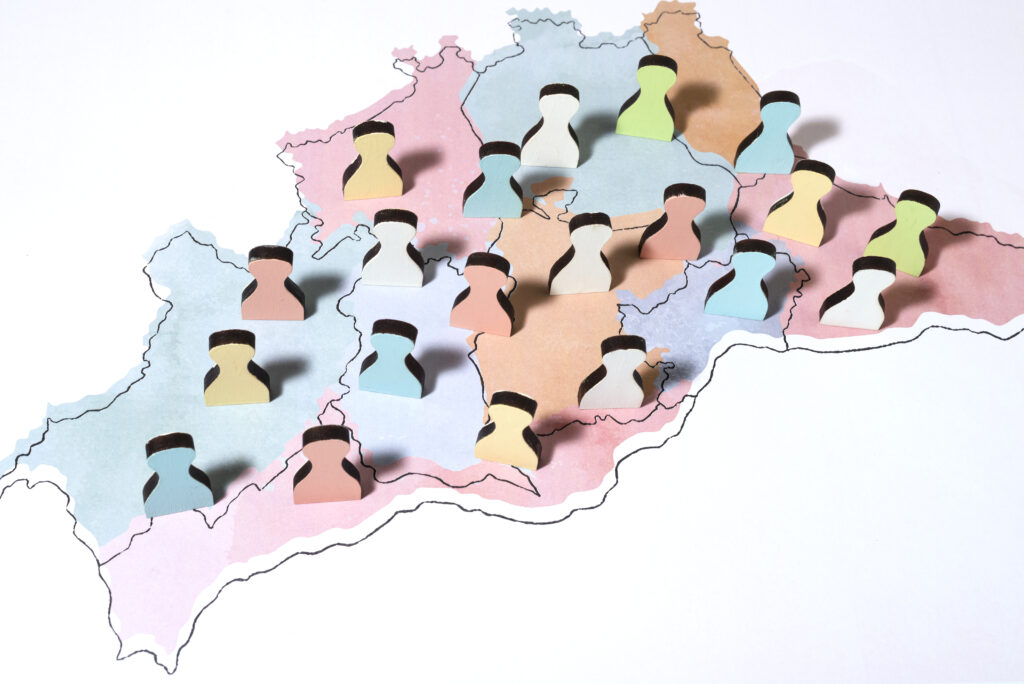
An ethnopublic is not a nation built from a single ethnic group. Nor is it a melting pot that dissolves ethnic difference. An ethnopublic emerges only when two or more ethnic groups consciously enter a governance alliance based on shared socio-economic interests.
This distinction is critical.
Ethnopublics are formed not through blood, race, or cultural uniformity, but through common purpose. Each participating ethnic group retains its internal sovereignty—its customs, moral systems, and cultural identity—while agreeing to govern overlapping interests collectively: land use, trade, infrastructure, security, welfare, and justice. In this sense, ethnopublics are govoxical formations of shared destiny, not shared ancestry.
However, such a formation faces an immediate structural risk: without the correct governance system, ethnopublics can quickly regress into ethnocracy. The stronger or more numerous ethnic group may dominate institutions, marginalising others. Over time, resentment accumulates, and the alliance fractures.
This is precisely why ethnopublics cannot survive under ethnocratic governance.
4. Why Populocracy Is Indispensable to Ethnopublic Survival
Populocracy is the only governance form structurally capable of sustaining ethnopublic alliances over time. Its defining feature is not majority domination, but power-reciprocity. Authority does not flow from ethnicity, class, or elite position; it flows from the collective will of the governed, expressed continuously rather than episodically.
Under populocracy, no ethnic group governs over another. Instead, all ethnopublics govern with one another. Populocracy neutralises ethnic hierarchy by anchoring legitimacy in participation rather than identity. Decisions are authorised by those affected, not by ancestral claims or demographic dominance. This ensures that ethnopublic governance remains functional rather than symbolic.
Where ethnocracy says, “This land is ours,” populocracy asks, “What arrangement best serves those who live and work on this land together?” Where ethnocracy enforces obedience, populocracy demands consent. Where ethnocracy hardens borders between peoples, populocracy builds administrative bridges between communities.
5. Equal Power-Reciprocity: The Core Synergy
The success of ethnopublic alliances depends on one non-negotiable principle: equal power-reciprocity. Each ethnic group must possess equal structural capacity to influence collective decisions, regardless of population size, historical prestige, or economic strength.
Populocracy guarantees this reciprocity by decoupling governance from identity. Votes are counted as civic expressions, not ethnic tallies. Policy legitimacy derives from shared outcomes, not tribal advantage. Over time, this produces trust—not because differences disappear, but because no group fears permanent subordination.
This is the synergy that defines ethnopublic success. Without populocracy, ethnopublics collapse inward. With it, they expand outward.
Conclusion: From Ethnic Origin to Civilisational Future
The world begins with ethnicity, but civilisation advances through cooperation. Ancient Africa understood this long before modern theory attempted to rediscover it. The transition from ethnocracy to ethno-populism was not accidental—it was an evolutionary response to the demands of scale, diversity, and moral coherence.
Today, as societies confront fragmentation, identity conflict, and governance failure, the ethnopublic model offers a corrective rooted not in abstraction but in historical practice. It affirms that unity does not require sameness, and governance does not require domination.
A single ethnic group can form a tribe, a clan, or even a kingdom. But it cannot form an ethnopublic nation. An ethnopublic is born only when multiple ethnic groups choose to govern together—through shared interests, reciprocal authority, and populocratic alignment.
In this synthesis, populocracy is not merely a governance option. It is the civilisational adhesive that binds ethnopublics into durable, just, and adaptive govoxical communities.
Ethnicity gives society its roots. Populocracy gives it its future.
Back to: 👇