
The Cortex is not the Mind: Cerebellar Agenesis and the Psychextric Proof of the Diencephalon as the Meaning Engine
BY: OMOLAJA MAKINEE
Modern neuroscience has long treated the cortex as the throne of human intelligence — the site of decision-making, reasoning, and conscious thought. Psychextrics dismantles this assumption entirely.
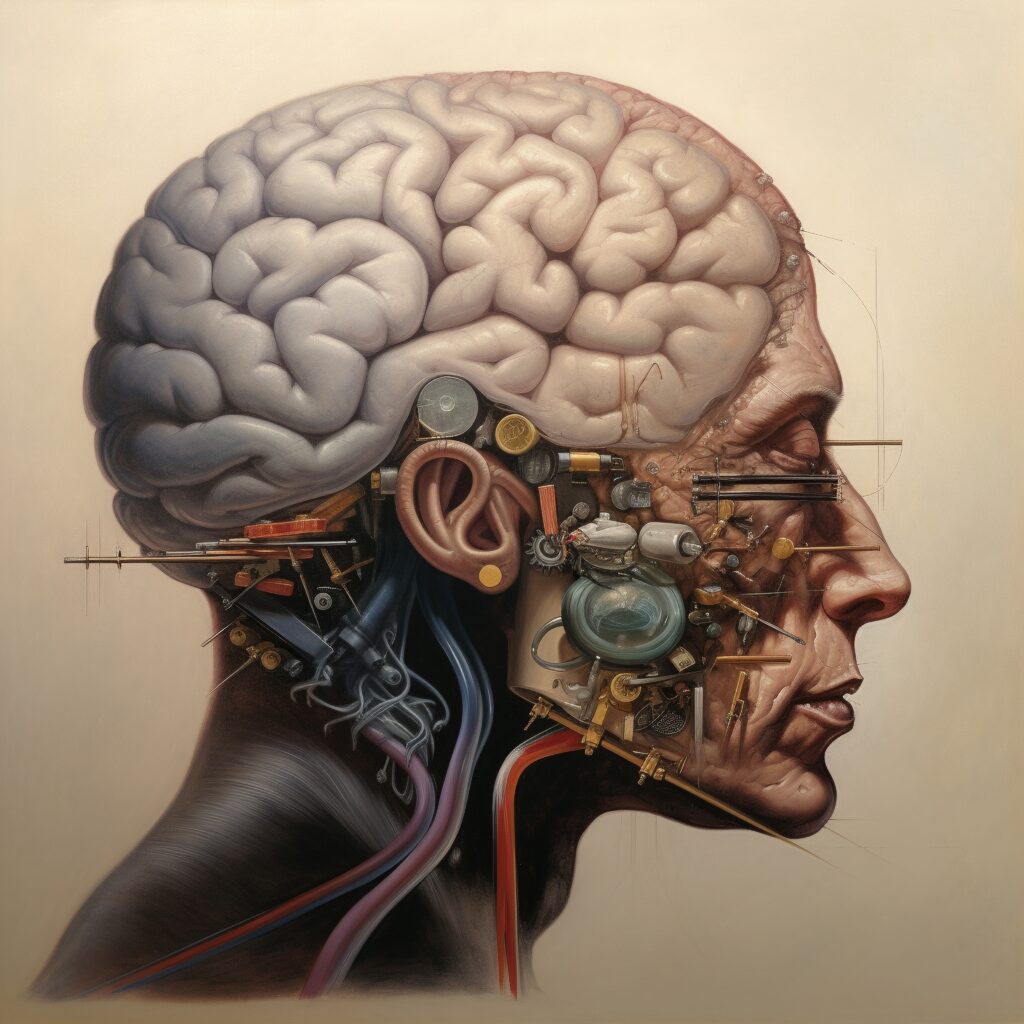
In the psychextric model, the diencephalon — not the cortex — is the true engine of meaning, decision, and behavioural generation. The cortex is not a thinker. It is a display window: the conscious rendering of conclusions already reached subconsciously.
Few clinical conditions expose this truth more clearly than cerebellar agenesis.
1. The Psychextric Architecture of the Brain
Psychextrics defines the brain’s functional hierarchy as follows:
- Diencephalon (thalamus, hypothalamus, epithalamus, subthalamus): The generator of meaning, desire, emotional temperature, motivation, and decision-making.
- Cortex: The field of consciousness — a display surface that renders, interprets, and projects diencephalic outputs into awareness.
The cortex does not decide what to think. It displays what has already been decided. This is not philosophical abstraction — it is anatomically demonstrable.
2. Cerebellar Agenesis: A Natural Experiment
Cerebellar agenesis — whether caused by genetic mutations (e.g., PTF1A) or intrauterine injury — results in the partial or complete absence of the cerebellum.
If classical neuroscience were correct, this condition should render:
- movement impossible,
- coordination absent,
- balance unachievable.
Yet this does not happen. Instead, we observe:
- delayed but present motor function,
- alternative cortical regions compensating imperfectly,
- variable severity across individuals,
- preserved consciousness and meaning-making.
This is the critical observation:
The loss of a structure does not erase function — it displaces its display.
3. Unbidden Compensation: Why Cortical Substitution Is Not a Choice
The compensatory involvement of alternative cortical regions in cerebellar agenesis does not occur by learning, intention, or conscious reallocation. It occurs unbidden.
In psychextrics, the cortex is not a decision-making agent capable of “choosing” to compensate. Rather, it is a neuro-mapped display surface, arranged according to inherited GIM directives. Neurotransmitters, signal pathways, and developmental neurons follow these maps with mechanical fidelity.
When neurons and signalling pathways destined for the cerebellum develop, they are guided by inherited genetic instructions toward a specific cortical destination. In cerebellar agenesis, these neurons arrive at the coordinates dictated by the GIM — only to encounter absence.
There is no reversal mechanism. Neurons do not retract, reassign themselves, or reinterpret their purpose. They simply continue forward along the existing neuro-map, reaching the next available cortical region in the sequence. That region, though genetically designed to display a different function, now becomes the unintended recipient of signals it was never meant to render.
The result is not functional replacement, but distorted display.
A. The Bucket Analogy of Cortical Display
This process can be understood through a simple physical analogy.
Imagine a vertical stack of buckets arranged to receive flowing water. Each bucket is designed to receive a specific volume and type of flow. If one bucket suddenly goes missing, the water does not reverse course or pause in confusion — it continues forward, spilling into the next bucket in the sequence.
The water remains the same. The bucket is wrong.
Likewise:
- the diencephalon generates instruction,
- neurotransmission follows inherited routes,
- the cortex displays whatever arrives.
If the correct display bucket (the cerebellum) is absent, the next cortical region receives the signal and displays it incorrectly — not by intention, but by inevitability.
Although the cortex appears horizontally arranged in anatomy, the functional neuro-map operates as layered vertical pathways, stacked by inheritance and developmental sequencing. Compensation is therefore not adaptive intelligence — it is overflow.
B. Why Delay and Distortion Are Inevitable
Because the receiving cortical region is not genetically designed for the incoming function, its display is:
- slower,
- less precise,
- developmentally delayed,
- behaviourally distorted.
This explains why individuals with cerebellar agenesis may achieve partial motor control, learning, or coordination — yet never with the fidelity, timing, or refinement of a correctly mapped system.
The meaning exists. The instruction exists. The display is misplaced.
C. Implication for Psychextrics
This unbidden overflow model reinforces the psychextric claim that:
- the cortex does not generate meaning,
- it cannot reassign roles,
- it merely displays what arrives.
Cortical “plasticity” is not proof of cortical intelligence — it is proof of display flexibility in the absence of choice. The mind does not improvise. It overflows.
4. Why Compensation Proves the Cortex Is Not the Engine
If the cortex were the origin of movement, balance, and coordination, then the absence of the cerebellum should result in absolute failure.
But compensation occurs. Why?
Because meaning and instruction originate elsewhere — in the diencephalon — and the cortex merely displays those instructions through genetically designated regions.
When the correct display region is absent:
- neighbouring cortical regions attempt to display the signal,
- but they do so inaccurately,
- because they are not genetically designed (via GIM) for that role.
This produces:
- dysarthria,
- ataxia,
- delayed learning,
- distorted coordination.
Not because the meaning is absent — but because the display window is wrong.
5. Genes Do Not Compensate — Displays Do
A fundamental psychextric rule:
Genes perform specific tasks. One gene cannot replacethe function of another.
To expect genes to compensate for missing genes is equivalent to expecting a person to change skin colour by thought alone. It is biologically incoherent. Yet this is precisely the assumption embedded in the outdated mainframe logic that treats the cortex as an intelligent, meaning-making command centre capable of compensating for absent neural architectures—a notion that open access to education and contemporary neuroscience has now rendered untenable, as we increasingly understand that neurotype genes do not substitute for one another.
What can compensate is display, not function. The cortex compensates because it is plastic as a screen, not because it is generative as an engine.
This is why:
- other cortical regions can approximate lost functions,
- but never replicate them precisely,
- and why delays and distortions persist in such event.
The diencephalon continues to operate normally. What is missing is the correct cortical interface.
6. GIM, HIM, and Species-Level Evidence
This framework extends beyond pathology into evolutionary diagnosis.
Psychextrics identifies species inheritance through GIM (Genetic Index Marker) by observing how:
- the cortex responds to diencephalic instructions,
- specific cortical regions consistently display specific functions,
- these patterns are conserved across individuals of the same species.
Species that share a common ancestor exhibit:
- homologous cortical display arrangements,
- consistent diencephalon–cortex mappings.
Species that diverge — even if phenotypically similar — show:
- different cortical layouts,
- different display logic,
- different conscious architectures.
Thus, the cortex becomes a map of inherited meaning-display, not a creator of meaning itself.
7. The Cortex as the Field of Consciousness
If the cortex is a display window, then consciousness itself is the field of display.
Psychextrics defines consciousness as:
The state of being aware of and responsive in perception to one’s surroundings.
This definition aligns precisely with cortical function. Consider common human experience:
- zoning out during conversation,
- driving on autopilot,
- mental wandering under stress or fatigue.
In these moments:
- the diencephalon continues generating meaning,
- but the cortical display dims or disconnects,
- awareness narrows or disappears temporarily.
This is not a failure of thinking — it is a dimming of the display window.
8. Zoning Out as Evidence of Display-Based Consciousness
Conditions such as: stress, anxiety, boredom, ADHD, depression, PTSD; all share one feature: disrupted conscious engagement, not absent subconscious processing.
People still:
- interpret stimuli,
- react emotionally,
- store memory highly selectively.
But they are not fully aware — because the cortical display is partially offline. This proves that:
- consciousness is not synonymous with cognition,
- awareness is not the same as thinking,
- the cortex holds consciousness together.
Without the cortex, the diencephalon remains active — but trapped within, unable to project meaning into awareness.
9. Cortical Size and the Density of Consciousness
Within psychextrics, larger or more developed cortical regions do not imply “greater intelligence” — they imply greater conscious bandwidth in that domain. A person with:
- expanded visual cortex has heightened visual awareness,
- expanded language cortex has richer linguistic consciousness,
- expanded emotional display regions has deeper affective awareness.
This is not superiority. It is field density. Consciousness does not originate in the cortex—but it occupies it.
10. Hormones, Brain Size, and the Bandwidth of Conscious Endurance
An important clarification within psychextrics is that cortical size and conscious bandwidth are not products of intelligence, but of hormonal influence on neurodevelopment. Across human biology, male brains are, on average, larger in total volume than female brains. This difference is not a marker of superior intelligence — intelligence remains gene-specific, variant-driven, and fluid across gender — but it does have implications for the density and endurance of conscious bandwidth.
Testosterone plays a significant role in promoting overall brain growth, and advantageous in regions associated with endurance under prolonged stress, sustained vigilance, and inhibitory control. Oestrogen, while critical for emotional attunement, social cognition, and neural efficiency, does not drive increased cortical volume in the same way. As a result, males, on average, possess a broader conscious field — not in meaning-making capacity, but in tolerance for sustained cognitive and emotional bandwidth. This distinction becomes most visible under extreme conditions.
Stress is not merely an emotional state; it is a test of conscious containment. The ability to remain cognitively intact under prolonged deprivation, confinement, hostility, or uncertainty depends less on intelligence and more on the capacity of the cortical display window to remain online without collapse. Within the psychextric framework, larger cortical volume provides greater buffering space for stress-induced hormonal and emotional noise.
This helps explain why, historically and institutionally, environments such as high-security prisons — characterised by intense stressors, rigid restriction, and prolonged psychological pressure — are structured differently for men and women. Male incarceration environments are harsher not by accident, but because male neurobiology, on average, tolerates higher sustained stress loads before conscious fragmentation occurs. Female prison systems are comparatively more lenient because prolonged high-intensity stress more rapidly overwhelms conscious bandwidth, increasing the risk of breakdown.
Again, this is not a statement about resilience of character or superiority of intellect. It is a statement about biological endurance of consciousness under load.
In psychextrics, intelligence belongs to the GIM–HIM architecture and is not gender-ranked. Conscious bandwidth, however — the ability to stay present, regulated, and intact under extreme pressure — is materially influenced by hormonal effects on cortical size. Testosterone expands the display field; oestrogen refines the signal within it.
Thus, the harmonic genome distinguishes clearly between:
- what the brain can know (intelligence), and
- how much strain the brain can hold without collapse (conscious bandwidth).
Confusing the two has led to centuries of false comparisons. Separating them allows for a more precise, humane, and biologically grounded understanding of human difference.
Conclusion: The Mind Is Subconscious — Consciousness Is Display
Cerebellar agenesis confirms the psychextric model. It demonstrates that:
- meaning is generated subcortically,
- decisions occur before awareness,
- the cortex is a display interface,
- consciousness is a rendered field.
The brain does not think in the cortex. It reveals thinking there. Psychextrics therefore reverses the neuroscientific hierarchy:
The diencephalon decides. The cortex witnesses.
And it is in this reversal that the harmonic genome finally becomes intelligible — not as a myth of conscious control, but as a science of inherited meaning seeking expression through fragile, plastic windows of awareness.
Back to: 👇